
Liter to kg, kg to Litres, MJ, kWh, litre m³ & L to m³ litre: LPG to Gas Unit Conversions
Liquid LPG to gas measurement units include Liter to kg, liters in a kilogram, kg to Litres, kg (kilograms), L (litres), MJ (megajoule), kWh (kilowatt hour) & L to m³ (litres to m³). In the USA, propane gas measurement units include Pounds, Gallons, BTU, Therms & ft³. LPG gas conversion is comparing one unit to another, like the kg to Litres or Litres to kg.
The first list shown below covers most of the common units of measure and gas bottle-cylinder sizes for Australia, including kg, litres, MJ, kWh & L to m³.
KG Liters – Kilogram to Liter – 1 Kilogram in Liters – 1 KG in Liter
Kilograms (kg) measure mass, while liters (L) measure volume.
When converting kilogram to liter, the units aren’t directly interchangeable, but for pure water at 4°C, 1 liter equals 1 kilogram, because water’s density is 1 kg/L.
For other substances, you must use the substance’s specific density to do the conversion:
Volume (L) = Mass (kg) / Density (kg/L), or
Mass (kg) = Volume (L) x Density (kg/L).
The key concept to remember is density.
Kilogram (kg):
A unit of mass measuring how much of a substance is in something.
Liter (L):
A unit of volume measuring how much space a substance takes up.
Density:
This is the relationship between mass and volume, measured in kilograms per liter (kg/L) for this conversion.
Examples:
Water: 1 L ≈ 1 kg (at 4°C).
LPG (propane): 1 L might be around 0.51 kg (less dense than water).
How to Convert
Find the Density: Look up the density of the specific liquid or substance.
Use the Formula:
To find liters: Liters = Kilograms / Density.
To find kilograms: Kilograms = Liters × Density.
Example Calculation: 5 Liters of propane
If milk density is about 0.51 kg/L:
Mass = 5 L * 0.51 kg/L = 2.55kg.
Liter Kilo – Liter to Kilo – 1 Liter 1 KG
A liter (L) measures volume, while a kilo or kilogram (kg) measures mass, so they can’t be directly converted unless you know the substance’s density.
For water, 1 liter is approximately 1 kilogram because water’s density is about 1 kg/L at 4°C.
To convert, use the formula:
Kilograms = Liters × Density (in kg/L).
A kiloliter (kl) is 1,000 liters, a unit for large volumes, not mass.
Liter vs. Kilogram vs. Kiloliter
Liter (L): A metric unit of volume of a substance (space it displaces).
Kilogram (kg): A metric unit of mass (how much of a substance).
Kiloliter (kl): A unit of volume, equal to 1,000 liters (1 kl = 1000 L).
How to Convert Liters to Kilograms
Identify the substance as different materials have different densities.
Find the density: Look up the density of the substance in kilograms per liter (kg/L).
Use the formula: Kilograms = Liters × Density.
Examples:
Water: Since 1 liter of water weighs about 1 kg, 5 liters of water weigh approximately 5 kg.
LPG (propane): Propane is less dense than water (around 0.51 kg/L), so 1 liter of propane weighs a little more than half a kilogram.
Litres to Kilos or Litres to kg (Liter to kg), 1 Lt in kg, Litres in a kg, Ltr into kg, Ltr kg, or Liters per Kilogram (Liters in a Kilogram) – Convert From litre to kg for LPG
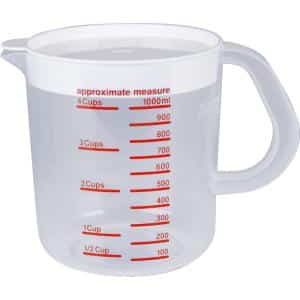 Litres to kilos, litres to kg (Liter to kg), litres in a kg, ltr into kg, or Ltr kg LPG gas conversion is a very common conversion.
kg to Litres, Kilos to L or Kilos to Litres or (kg Liters) 1 Kilogram to Liter: kg to Ltr Kilograms to Liters Conversion for LPG to Gas
Kilogram to Liter – kg to Litres (kg Liters) is also a common kilograms to liters conversion (kg to lt conversion). kg to litres conversion for water is 1kg to 1L.
To convert kg to litres for LPG, with its different specific gravity, for 1 kilogram to liter you calculate kg to Ltr for LPG (propane) as 1 kg to 1.96 ltr of LPG
LPG to Gas Measurement Unit Conversion Formulas (Metric):
- Convert L to kg: Litres in a kg, Ltr into kg, L to kg conversion is 1 L to 0.51 kg of LPG liters in a kilogram
- Convert kg to litres: kilogram to liter – kg to ltr conversion is 1 kg to 1.96 litres (1kg to 1.96 ltr) of LPG
- Convert LPG kg to m³: 1 kg to 0.546 m³ of LPG (this is a liquid LPG to gas conversion)
- Convert LPG cubic metre (m³) to kg: 1 cubic metre (m³) to 1.8315 kg of LPG (this is an LPG gas to LPG liquid conversion)
- Convert LPG L to m³ (litres to m³): it is 1 L to 0.27 m³ (1 litres to 0.27m³) of LPG (this is a liquid LPG to gas conversion)
- Convert LPG m³ litre: 1 m³ = 3.70 litre of LPG (this is an LPG gas to LPG liquid conversion)
- Convert LPG megajoules to kWh (MJ to kWh): 1 megajoules to 0.278kWh (1 MJ to 0.278 kWh) of energy from LPG
- Convert LPG kWh to MJ: 1 kWh to 3.6 MJ of energy from LPG
- Convert LPG litres to mega joules: 1 litre to 25 MJ (1 litres to 25 mega joules) of energy from LPG
- Convert LPG mega joules to litres: 1 mega joules to 0.042 litres of LPG
- Convert LPG kg to mega joules: 1 kg to 49 mega joules of energy from LPG
- Convert LPG mega joules to kg: 1 mega joules to 0.02 kg of LPG
- Convert LPG litres to kWh: 1 L to 6.9 kWh (1 litres to 6.9 kWh) of energy from LPG
- Convert LPG kWh to litres: 1 kWh to 0.145 L of LPG
- Convert LPG kg to kWh: 1 kg to 13.6 kWh of energy from LPG
- Convert LPG kWh to kg: 1 kWh to 0.074 kg of LPG
- Convert LPG litres to BTU: 1 L to 23,700 BTU (1 litres to 23,700 BTU) of energy from LPG
- Convert LPG kg to BTU: 1 kg to 46,452 BTU of energy from LPG
LPG Specific Gravity – Density
LPG Gas Consumption in Mega Joules (megajoules)
 per Hour (MJ/hr) ratings on appliances actually indicate the gas consumption of the appliance, not the output.
Appliance Output in kW – Mega Joules to Kilowatts
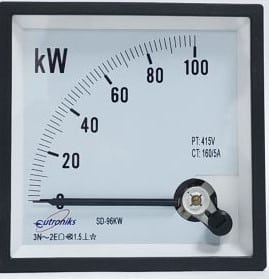 Mega joules to kilowatts is the measurement of energy, typically when comparing gas energy to electricity. Mega joules are units of energy contained in gas. Kilowatts are units of electrical energy.
 That is why we have Star Ratings, so we can compare relative efficiency between models.
MJ to kWh – Megajoules to kWh or Megajoule to kWh
kWh to MJ
To convert kWh to MJ is measuring the MJ input required for power output over time.
To convert LPG kWh to MJ: 1 kWh to 3.6 MJ of energy from LPG
BTU to Mega Joules (BTU to MJ or MJ to BTU) Conversion
Propane BTU per Liter
 Combining metric and imperial measures is not typical but it can be easily calculated.
L to m³ (litres to m³) & m³ Litre – How Many Litres in a Cubic Metre: Liquid LPG to Gas Volume Expansion
 For litre M³, converting 1L to 270L of gaseous LPG.
LPG Cubic Metre to kg ⇔ LPG kg to Cubic Metre (m³) LPG to gas unit LPG gas conversion
LPG 1 cubic metre to 1.8315 kg (1 m³ to 1.8315 kg). Whilst propane is 1m³ to 1.8315 kg, butane is 1m³ to 2.4486 kg.
Propane and butane have different densities so the LPG cubic meter to kg value is different.
When comparing LPG cubic metre to kg (m3 to kg) you are comparing LPG volume in its gaseous state (cubic metre) to the mass of LPG liquid (kg).
1 cubic metre of LPG weighs 1.8315 kg (1m³ to 1.89 kg), which is an LPG gas to liquid LPG gas conversion.
The reciprocal is 1 Kg of LPG would be 0.53 cubic metres of LPG to gas (1kg to 0.546m³), which is a liquid LPG gas conversion.
The values above assume the LPG is propane.
To convert LPG cubic metre to kg you simply use the propane-LPG cubic metre to kg gas unit LPG gas conversion formula: LPG cubic metre (m³) to 1.8315 kg.
The more detailed explanation for LPG cubic metre to kg is 1 cubic metre to 1.8315 kg of liquid LPG (propane) at 25 °C (77 °F). LPG cubic metre to kg (m3 to kg) varies with temperature.
The same is true of LPG kg to m³ LPG gas conversion.
LPG kg to cubic metre is: 1kg to 0.546 m3 (1kg to 0.546 cubic metre) LPG to gas (propane)
For butane LPG kg to cubic metre: 1kg to 0.4084 m3 at 25 °C (77 °F)
For butane LPG cubic metre to kg is: 1m3 to 2.4486 kg
LPG cubic meter to kg and LPG kg to cubic meter (m³)
When comparing LPG cubic meter to kg you are comparing LPG in its gaseous state (cubic meter) to LPG liquid (kg).
For LPG cubic meter to kg, 1 cubic meter of gas equals 1.8315kg of liquid LPG.
LPG cubic meter to kg: 1m³ to 1.8315kg (1 cubic meter to 1.8315kg) of propane at 25 °C (77 °F)
LPG kg to cubic meter: 1kg to 0.546 m³ (1kg to 0.546 cubic meter) for propane
For butane LPG cubic meter to kg: 1kg to 0.4084 m³ at 25 °C (77 °F)
For butane LPG kg to cubic meter: 1m³ to 2.4486kg
LPG cubic meter to kg (m³ to kg) varies with temperature.
The same is true of kg to m³ conversion.
Gas Bottle Tare Weight
Measuring LPG by Pressure
When LPG (propane) is stored in a gas bottle, it is under pressure.
The term “pressure” refers to the average force per unit of area that the gas exerts on the inside walls of the gas bottle.
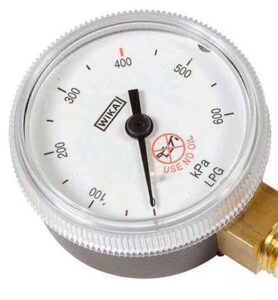 The pressure is measured in kilopascals (kPa). (see image)
“Bar” is yet another unit of measure for pressure. 1 Bar to 100 kPa, so it is metric based but not an SI unit of measure.
LPG pressure can vary greatly based on temperature.
The level of fill in the gas bottle comes into play when the LPG is being used, as it affects the rate of vapourisation.
As LPG is a liquefied gas, the pressure inside the cylinder will remain the same from full to empty (after the last of the liquid LPG is used), then the pressure will fall quickly as the last of the LPG vapour is used.
The use of Pressure as a measurement in LPG use is very limited.
A steady Pressure only shows that liquid LPG is inside the cylinder, and not how much liquid is left.
In the US, pressure is measured in pounds per square inch (psi).
Psi is defined as 1 pound of force applied per square inch. As a comparison, 1 psi to 6.89476 kPa.
LPG Cylinder Capacity in Litres – How Many Litres in a 45kg Gas Bottle
| Size (in kg) | Capacity in Litres |
| 3.7 | 7.25 |
| 8.5 | 16.6 |
| 15 | 29 |
| 18 | 35 |
| 45 | 88 |
| 90 | 176 |
| 210 | 411 |
Volume of a cylinder in litres. This is for propane based on 1kg to 1.96L
The most common gas bottle sizes for home and business use are 45kg gas bottles, 90kg gas bottles and the 210kg gas bottle.
45kg gas bottles are the most popular size and can be used for home LPG gas bottle exchange and home gas tanker deliveries.
LPG cylinder capacity in litres is based on filling it to 80%, to allow for expansion.
The other 20% is referred to as ullage. If an LPG cylinder capacity in litres is 80 litres, the actual ‘water capacity’ is 100 litres.
A common question is: How many litres in a 45kg gas bottle?
LPG cylinder capacity in litres for a 45kg gas bottle is about 88 litres and is the most popular size for both domestic and commercial applications.
The LPG cylinder capacity in litres can change if sold by the kg, as propane has 1.96L per kg whilst butane has only 1.724L per kg. This is because the two gases have different specific gravity.
LPG cylinder capacity in litres goes from a small LPG cylinder capacity of 7.25 litres for a 3.7 kg LPG cylinder to a large LPG cylinder capacity of 411 litres for a 210 kg LPG cylinder.
The chart below shows LPG cylinder capacity in litres for the 7 most popular sizes of LPG cylinder based on 1.96 litres of LPG cylinder capacity per kilogram (1 kg to 1.96 L).
90 kg LPG cylinder capacity is about 176 litres and is popular for tanker fill and underground storage, for both domestic and commercial applications.
210 kg LPG cylinders capacity is about 411 litres of LPG and is the largest cylinder for both domestic and commercial applications.
It is different because it has 2 outlets, one to withdraw gas and one for liquid, typically used for decanting.
 14.2 kg LPG cylinder capacity is about 27.8 litres and is the most popular cooking gas cylinder size in India.
LPG cylinder capacity in litres is considered full at 80%, to allow for ullage (see image).
Ullage is the empty LPG cylinder capacity at the top of the cylinder that provides room for expansion of the gas vapour.
Get My Price Now
Propane Conversions Table: Pounds, Gallons, BTU, Therms & ft³
For our friends in the USA:
LPG gas conversion values in US gallons, pounds, BTUs, therms and cubic feet.
LPG Gas Conversion Formulas (US Units of Measure):
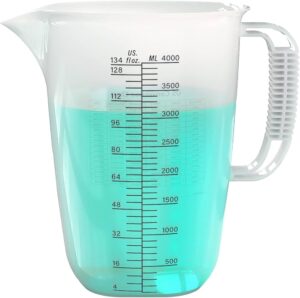 Propane Gallons to Pounds: 1 Gallons to 4.23 Pounds (1Gal to 4.23lbs)
- Propane Pounds to Gallons: 1 Pounds to 0.24 Gallons
- Propane Gallons to BTU: 1 Gallons to 91,502 BTU
- Propane Pounds to BTU: 1 Pounds to 21,594 BTU
- *Propane Gallons to ft3: 1 Gallons to 36.38ft3 LPG to gas
- *Propane Pounds to ft3: 1 Pounds to 8.59 ft3 LPG to gas
- BTU to Therms: 1 BTU to 0.000009993 Therms
- Therms to BTU: 1 Therm to 100,067 BTU
 *Note that these are Liquid LPG gas conversions
LPG to gas unit LPG gas conversion is the comparison of one gas unit measurement with another.
Having a given quantity of one gas unit, you convert it to an equivalent amount in another gas unit, with a LPG gas conversion formula, table or chart.
Gas Unit Conversion
For kilojoules to BTU, 1 kilojoule to 0.9478 BTU, when converting from metric (joules) to Imperial units (British Thermal Units) of measure.
Metric pressure units are Pascals vs PSI. 1 kPa (kilopascal) to 1,000 pascals.
Convert kg to Litres LPG – LPG Conversion kg to Litres – How Do You Convert LPG kg to L – Convert kg to Litres LPG
Unlike water, 1kg of LPG does NOT equal 1L of LPG. This is because the density or specific gravity of LPG is less than water.
In Australia, where LPG is propane, 1kg to 1.96L. Conversely, 1L of LPG weighs 0.51kg.
How many liters in a kilogram for 1 kg of LPG? There are 1.96 litres to 1 kg LPG. In Australia and US, LPG is >95% propane and weighs 0.51 kg per litre, so 1 kg to 1.96 litres.
To convert kg to litres LPG: LPG gas conversion kg to litres is 1 kg to 1.96 litres.
So, 1 kg LPG gas is 1.96 liters of LPG (convert LPG kg to litres).
For example, there are 29.4L litres of LPG in a 15kg cylinder. There are 35.3L litres of LPG in a 18kg cylinder.
It is important to note that water and LPG (propane) have different LPG gas formulas because they have different density.
Water Litre to kg: 1 Litre to 0.999975 kg, so for all practical purposes 1 L to 1 kg (liters in a kilogram)
Water kg to Litre: 1 kg to 1 litre
Example: LPG Gas 14.2 kg Equals How Many Liters with 75% Butane
For kg to litres, LPG (propane) 1 kg to 1.96 L. Therefore, 14.2 kg to 27.832 L.
For kg to litres, LPG (butane) 1 kg to 1.724 L. Therefore, 14.2 kg to 24.48 L
LPG gas 14.2 kg equals how many litres with 75% Butane?
To calculate volume, in litres, takes some simple arithmetic.
With a 75:25 butane:propane mix, 1kg to 1.783 L.
Therefore. 14.2 kg to 25.34 L, with a 75:25 butane:propane mix.
BTU to MJ – Mega Joules Gas Unit Conversion
LPG energy content is expressed in BTU and MJ – Mega joules.
BTU, or British Thermal Unit, is another older measure of heat output based on the Imperial System.
As previously mentioned, BTU is used in the USA instead of MJ.
For BTU to MJ, one BTU is the energy required to raise the temperature of 1 pound of liquid water by 1°F, at sea level.
For MJ to BTU, 1MJ equals 948 BTU, so to get an equivalent number of Megajoules, just divide the BTU rating by 948.
LPG BTU per Litre – Propane BTU per Litre – LPG Energy Content Gas Unit Conversion
LPG – Propane BTU per litre: 1 litre to 23,700 BTU per litre. Propane BTU per liter combines an old imperial energy measurement – BTU – with a metric volume measurement – litre.
LPG – propane energy content is expressed in BTU per litre.
This is based on 1MJ equalling 948 BTU, so to get an equivalent number of BTU, just multiply the MJ rating by 948
So, as 1L to 25 MJ then 25 MJ x 948 to 23,700 BTU per litre
LPG BTU per KG – LPG Energy Content Gas Unit Conversion
LPG BTU per kg is 46,452 BTU in 1 kg of LPG. LPG BTU per kg is LPG energy content based on weight.
LPG energy content gas unit LPG gas conversion is expressed in BTU per kg. LPG – Propane BTU per kg to 46,452 BTU per kg
Since for LPG, it is 1kg to 1.96 L, then based on the above 1.96 x 23,700 BTU/L to 46,452 BTU. So, 1kg to 46,452 BTU per kg
Combining metric and imperial measures is not typical but it can be easily calculated.
How is LPG Gas Measured for Homes
When Liquefied Petroleum Gas – LPG – is used in the home, LPG gas is typically measured in kilograms.
LPG gas in gas bottles is weighed and the price is based on the weight of the gas (e.g. 45kg).
When produced, stored or transported, bulk LPG gas is measured in tonnes (e.g. 1,000kg).
Home LPG gas is also measured in litres of gas, if delivery is made by a tanker truck, instead of by gas cylinder exchange.
The tanker truck has a gas meter attached to a hose reel that measures the gas as it is pumped into the customers’ vessels.
A common way LPG gas is measured and selling LPG is by weight, in kilograms.
There are different sizes of LPG gas bottles and the gas is sold based on the contents of a full bottle.
Home LPG gas is measured in 45kg gas bottles.
BBQ gas is typically LPG gas measured and supplied in 9kg gas bottles.
These numbers represent the weight of the gas, excluding the tare weight of the gas bottle.
FAQs for Gas Units of Measure
1 lt in kg - 1L to kg
1 lt in kg (1L to kg) is a formula that is true for water (H2O), but not for other liquids with different densities.
For example, 1kg of propane (LPG) has a volume of 1.96 liters in a kilogram, as it has a much lower density.
Conversely, 1 litre of propane weighs 0.51kg.
1 lt to kg - 1 litre to kilo - 1 litre to kg
1 lt to kg (1 litre to kilo or 1 litre to kg) is a formula that is true for water (H2O), but not for other liquids with different densities.
For example, 1 litre of propane weighs 0.51kg, as it has a much lower density.
Conversely, 1kg of propane (LPG) has a volume of 1.96 liters in a kilogram.
litres to kg - liter to kilo - litres to kilos - liter to kg - converting litres to kilograms - lt to kg conversion
Litres to kg (liter to kilo, litres to kilos, or liter to kg) is a comparison of volume to weight.
For water (H2O),1 litre is equal to 1kg.
However, this is not true for other liquids with different densities.
For example, 1 litre of propane weighs 0.51kg, as it has a much lower density.
Conversely, 1kg of propane (LPG) has a volume of 1.96 liters in a kilogram.
kg to litres - kilogram to liter - kilos to litres - kg to L - kg to ltr conversion
kg to litres (kilogram to liter or kilos to litres) is a comparison of weight to volume.
For water (H2O), 1kg equals 1 litre.
However, this is not true for other liquids with different densities.
For example, 1kg of propane (LPG) has a volume of 1.96 liters.
1 kilogram in liters - 1 kilogram to liter
1 kilogram in liters (1 kilogram to liter) is a formula comparing weight to volume.
It is true for water (H2O), where 1 kilogram equals 1 liter.
However, this is not true for other liquids with different densities.
For example, 1kg of propane (LPG) contains a volume of 1.96 liters.
MJ to kWh
MJ to kWh is a comparison of the energy contained in a gas to electric energy.
For example, with propane (LPG) MJ to kWh: 1 MJ of propane to 0.278 kWh
MJ to kJ
For example, 1 megajoule is equal to 1,000 kilojoules.
Formula:
kJ = MJ × 1000
Example:
To convert 5 MJ to kJ, you would calculate 5 MJ × 1000 = 5000 kJ
kWh to MJ
kWh to MJ
Example: Convert propane (LPG) kWh to MJ: 1 kWh to 3.6 MJ of energy from propane
MJ to kW - megajoules to kW - convert MJ to kW
MJ to kW (megajoules to kW or convert MJ to kW): For propane (LPG) 3.6 MJ of input equals 1kW of output at 100% efficiency.
kW to megajoules - kW to MJ
kW to megajoules (kW to MJ): 1 kW to 3.6 MJ
Conversely, 1 megajoules to 0.278kW or 1 MJ to 0.278kW
New Residential LPG customer?
New Business LPG customer?
Existing ELGAS customer?

Eric Hahn has over a decade of experience in the LPG industry and has become a key figure in shaping how LPG is marketed and communicated. As the creator of one of the world’s first LPG blogs, Eric has authored over 200 technical posts, helping educate and inform the industry and consumers.
Eric has served on multiple committees for Gas Energy Australia and the World LPG Association (WLPGA), contributing to important discussions and advancements within the global LPG sector. He has presented at WLPGA Annual Conferences, sharing his expertise as a speaker, panellist, and panel chair.
- Winter on the Manning River: Beautiful but Brisk - July 6, 2026
- The Harsh Reality of June in the Snowy Mountains - July 6, 2026
- The True Cost of a Freezing Guest in the Snowy Mountains - July 6, 2026
Steve Reynolds
Technical Consultant
Steve Reynolds is a leading expert in the LPG industry with over 22 years of experience. As part of the national management team at ELGAS, Steve ensures the safe and efficient storage, handling, and transportation of LPG. He serves as the lead investigator for incidents and collaborates with authorities on industry developments.
Steve is a technical advisor to Standards Australia and Gas Energy Australia (GEA), and an active member of the World LPG Association (WLPGA), contributing to global standards and technical reviews. He holds a BSc. (Hons) in Industrial Chemistry from UNSW and has held senior safety and technical roles at ELGAS, making him a trusted authority in LPG safety and standards.