

1800 STARGAS (1800 782 742)
Reviewed by Richard Fowles, MSc (Eng) Welding Engineering, Metallurgy and Materials Engineering
Fellow of the Institute of Engineers Australia
Helium Tank with Helium Gas – Helium Tank Hire – Helium Gas – Helium Bottle Hire – Helium Tank Near Me

Stargas New Customer Offer
$50 Off First Order
Quote offer SG50 when placing your first gas order
Valid 1 November 2025, expiring 31 October 2028
Helium – Helium Gas
Helium gas (Symbol: He) is a colourless, odourless and non-toxic gas known for being much lighter than air.
Find helium vapour (helium gas) and liquid both have very low viscosity, which is why helium leaks out of an apparently sealed balloon. Helium gas is non-flammable.
Helium boiling point: −268.9°C or −452.1°F, making helium the lowest condensation temperature of any known substance.
Helium is the only element that remains liquid down to absolute zero (0°K) at 1 atm.
Helium is the second most abundant element found in the universe.
Helium (helium gas) comes in various helium cylinder sizes or helium bottle sizes.
Helium in Balloons
Helium causes balloons to float because it’s much lighter than air, allowing balloons to rise, but it’s crucial not to inhale it due to asphyxiation risks.
It is also a non-flammable, non-toxic gas.
Helium balloons are prevalent at parties, available with services or tanks, and can be treated with Hi-Float to extend float time.
Foil balloons requiring care not to burst in heat or conduct electricity when let go.
Why Use Helium?
Helium atoms are very light, and the gas is less dense than the surrounding air, causing the balloon to drift upwards.
Helium is non-toxic and non-flammable, unlike hydrogen, which poses a fire risk.
Safety & Application
Do not inhale helium.
Breathing helium can lead to dizziness, asphyxiation, and other serious problems, even though it’s not toxic.
Always keep tanks upright and stable.
When transporting consider providing ventilation to prevent hazardous buildup in a confined space.
Always tie balloons to weights and never release them into the sky.
This is especially true for foil balloons, as they can become electrical hazards.
Increasing Float Time
Hi-Float is a liquid polymer applied inside latex balloons before inflation.
It creates a barrier that slows the escape of the helium, substantially increasing float time from hours to days.
Where to get Helium Balloons
Party supply stores like Spotlight, Kmart, and BIG W, often offer balloon inflation services and helium tank hire.
What is Helium Used For?
The most familiar use of helium (helium gas) is as a non-flammable and safe gas to fill party and parade balloons.
 However, helium (helium gas) is an important component in many applications, including high-tech manufacturing, scientific research, medical technology, the defense industry, and space exploration.
Where can you buy helium (helium gas) for balloons?
We offer helium tank with helium gas for helium tank hire (helium bottle hire).
One helium tank hire (helium canister hire) will inflate either 140, 300 or 750 x 28cm helium balloons, depending on the helium tank sizes (helium cylinder sizes).
We also offer helium near you with free delivery when you buy helium, in our normal service area, of helium tank hire or helium bottle hire (hire helium tank rental) and a great helium gas price (helium tank price – helium tank cost).
No need to buy helium tank (helium bottle), as we specialise in helium tank hire (helium bottle hire).
Get helium gas (helium for balloons) with hire helium tank rental and helium tank refill (helium tank fill up) in G2, E2 and D2 helium tank sizes (helium cylinder sizes).
Helium tank hire (helium bottle hire) of a D2 tank size (helium cylinder sizes) is a small helium tank to fill approximately 140 refill helium balloons.
Get helium gas (helium for balloons) with larger helium tank hire (hire helium tank rental) in E2 and G2 helium tank sizes (helium cylinder sizes) to fill 300 and 750 refill helium balloons, respectively.
All helium tank hire (helium bottle hire) are designed for helium tank refill (helium tank fill up) and transport at great helium gas price (helium tank price – helium tank cost) when you wish to buy helium.
How Long Do Balloons Last with Helium? How Long Should Helium Balloons Last?
How Long Do Helium Balloons Last?
How long do balloons last with helium or how long should helium balloons last?
Helium balloons will last as briefly as 8-12 hours or as long as a few days, depending on the type of balloon and environmental conditions, such as extreme temperatures, high humidity, and direct sunlight, all potentially reducing duration.
Keep balloons indoors in a cool, dark, and air-conditioned room to extend longevity.
Untreated latex balloons normally last 8–12 hours, whilst those treated with Hi-Float sealant may extend that time up to 48 hours.
Foil (Mylar) balloons typically last from 3–7 days or more.
Clear plastic bubble balloons can last for 1–2 weeks, the longest of any type.
Large balloons with greater helium content typically last longer.
Can Helium Tanks Be Refilled – Helium Tank Refill – Don’t Buy Helium Tank
Can you refill helium tanks or helium bottle? Disposable small helium tank or helium bottles, like Balloon Time, cannot be refilled.
Don’t buy helium tank or helium bottle. These disposable small helium tank sizes are designed to be lightweight, easy to use, disposable and recyclable, but NOT safely refillable.
Helium tanks (helium gas tank) can be refilled, if designed that way.
All of our helium bottle hire (helium tank rental) are intended to get helium gas (helium for balloons) and helium refill, preventing waste when you buy helium gas.
We do a helium tank (helium gas tank) refill during rentals, if you run out of helium gas (helium for balloons), and a helium refill every time helium tanks come back, after a helium bottle hire.
Helium refill is done at a great helium tank refill cost and helium cylinder price.
Helium Gas Price: Helium Tank Price – Helium Tank Cost – Buy Helium Gas
Helium tanks can be refilled at a very attractive helium gas price (helium tank price – helium tank cost) when you want to buy helium gas.
All of our helium bottle hire (hire helium tank rental) helium tanks can be refilled, as it is a common procedure.
Only disposable tanks (helium gas tank) cannot be refilled and they also cost more than when helium tanks can be refilled.
Helium tank refill (helium tank fill up) of a non-refillable lightweight disposable tank can be very dangerous, so don’t buy helium tank or helium bottle.
Where to Buy Helium – Helium Tank Hire – Helium Bottle Hire – Helium Tank Rental
Where can you buy helium (helium gas) for balloons? Where to buy helium gas – helium for balloons (where to purchase helium gas)?
We have helium bottle hire (helium tank rental) with your choice of helium gas (helium for balloons) of a small helium tank for 140 balloons, 300 balloons or 750 balloons capacity.
We also offer free delivery in our normal service area for a super easy helium tank hire (helium bottle hire).
We specialise in helium tank rental (helium bottle hire).
Helium bottle hire is the best and most popular way to get helium gas (helium for balloons) and helium tank refill (helium tank fill up) so no need to buy helium tank.
You can get helium bottle hire in various helium tank sizes (helium cylinder sizes), depending on your needs.
Helium bottle hire (helium tank rental) of a D2 helium tank sizes or helium bottle sizes (helium cylinder sizes) is a small helium tank to fill approximately 140 refill helium balloons.
Get helium gas (helium for balloons) with larger helium bottle hire in E2 and G2 helium tank sizes (helium cylinder sizes) to fill 300 and 750 refill helium balloons, respectively.
With helium tank refill you can extend the helium tank hire (helium tank rental) for as long as you need it. You don’t need to wastefully discard a disposable helium tank when you buy helium with helium bottle hire & helium tank refill (helium tank fill up).
Helium Tank Size Chart – Helium Bottle Sizes – Helium Cylinder Sizes – Helium Tank Dimensions
Helium tank sizes, helium bottle sizes, or helium cylinder sizes for helium bottle hire are shown in the helium tank size chart below, including for G2, E2 and D2 helium tank sizes (helium cylinder sizes) and helium tank dimensions:
Helium Tank Sizes – Helium Bottle Sizes and Helium Tank Dimensions
|
Helium Tank Sizes – Helium Bottle Sizes & Helium Tank Dimensions
|
||||
| Helium Tank Sizes – Helium Bottle Sizes | Number of 28cm Balloons Inflated | Helium Gas Cylinder Sizes: Diameter | Helium Gas Cylinder Sizes: Height | Helium Gas Cylinder Sizes: Tare Weight |
| G2 helium tank sizes | 750 | 230mm | 1460mm | 54kg |
| E2 helium tank sizes | 300 | 204mm | 780mm | 24.5kg |
| D2 helium tank sizes | 140 | 176mm | 550mm | 13.7kg |
|
Actual helium tank dimensions and tare weights may vary by helium tank sizes (helium cylinder sizes)
Estimates only for average size 28cm gas balloons
|
||||
Uses of Helium Gas – What is Helium Used For?
Some notable uses of helium gas include helium gas (helium for balloons) used for filling of decorative gas balloons, helium (helium gas) is used to provide lift in Lighter-Than-Air ships – blimps and dirigibles – based on its extremely low density compared to air.
Helium gas is used as a cooling agent in scientific devices such as the Large Hadron Collider, MRI scanners and NMR spectrometers, as well as being used as a carrier gas for gas chromatography.
Helium gas is not flammable and very inert.
This lends itself to use as a protective atmosphere for a number of processes including welding and semiconductor production.
Deep sea divers make a mixture of 80% helium (helium gas) and 20% oxygen.
This eliminates nitrogen, which normally makes up 80% of the air we breathe, reducing nitrogen narcosis and other adverse physiological effects.
Liquid helium is used to promote superconductivity in certain metals
Helium Refill of Gas Balloons- Refill Helium Balloons – Get Helium Gas and Balloons
Some people refill helium gas balloons to recycle and save money on helium gas and balloons.
Whether you can refill helium gas balloons, or not, depends on the method used to seal them.
If you knot the end of the helium gas and balloons, you probably can’t do a helium gas (helium for balloons) helium refill of your balloons.
If you used removable plugs then you can probably can do a helium refill of your balloons.
Show Me My Gas Price

What is Helium
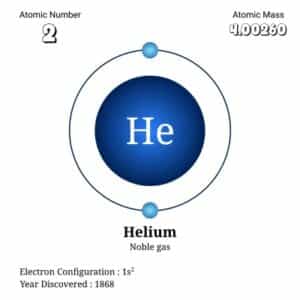
Helium is an inert noble gas that is colourless, odourless, and tasteless monatomic with the symbol He and the atomic number of 2.
Helium is known for its lighter than air (low density) property and used in balloons and blimps.
It is also an excellent cryogenic coolant used in medical devices and electronics manufacturing.
Properties of Helium
Helium is the second most abundant element in the universe, created by nuclear fusion in stars.
However, it is rare on earth coming from radioactive elements that decay, like thorium and uranium.
It is also extracted from raw natural gas.
Helium is gas at room temperature and has the lowest boiling point of any element and can only be solidified under high pressure.
Helium boiling point is -268.9°C (-452.07°F).
It is also very safe as it is non-toxic and non-flammable.
What is Helium Used For
It is popular in lighter than air (0.000164 g/cm3) applications, like balloons and blimps but unlike hydrogen, it is non-flammable.
Helium’s extremely low boiling point makes it an excellent cryogenic coolant for superconducting magnets, as found in MRI scanning machines.
Divers mix helium with air to prevent decompression sickness (DCS), also called the Bends, that occurs when a diver ascends too quickly from a high-pressure underwater environment.
A mixture of helium and oxygen (called Heliox) is used as a respiratory aid, making breathing easier, to help with severe asthma or emphysema.
In welding, it acts as an inert shielding gas for MIG and TIG welding, protecting the weld from atmospheric contamination.
Helium is also used as a shielding atmosphere in the production of silicon and germanium crystals for semiconductors, as well as in the production of titanium and zirconium.
Helium Gas Properties Table
The following chart shows the common helium gas properties:
| Helium Periodic Table Symbol: | He |
| Helium Boiling Point: | -268.9°C or -452.1°F |
| Helium Melting Point: | -272.20°C or ?-457.96°F (at 2.5 MPa) |
| Helium Density (g cm-3): | 0.000164 |
| Density of liquid helium at melting point: | 0.145 g/cm3 |
| Density of liquid helium at boiling point: | 0.125 g/cm3 |
| Relative atomic mass of helium: | 4.003 |
| Helium Atomic Number: | 77522 |
| Helium Atomic Mass: | 4.00260 g.mol -1 |
| Helium Flame Temperature | Helium is non-flammable |
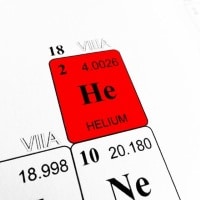
Helium Symbol: He and Helium Atomic Number: 2
The Helium symbol is He.
Helium atomic number (number on the periodic table) is two (2).
Types of Helium Gas – Grades of Helium Gas
When you buy helium gas, the different types of helium (helium gas) are based on purity and expressed in purity grades.
The low purity Grade 4 helium gas (helium for balloons) is balloon gas grade.
The higher purity grades are used in semiconductor manufacturing and scientific applications.
Grades 4.x are industrial grade purity levels.
Helium Grade 6 (6.0 helium = 99.9999% purity)
Helium Grade 5.5 (5.5 helium = (99.9995% purity)
Helium Grade 5 (5.0 helium = 99.999% purity)
Helium Grade 4.8 (4.8 helium = 99.998% purity)
Helium Grade 4.7 (4.7 helium = 99.997% purity)
Helium Grade 4.6 (4.6 helium = 99.996% purity)
Helium Grade 4.5 (4.5 helium = 99.995% purity)
Helium Grade 4 (4.0 helium and lower = 99.99% purity)
Where Can You Buy Helium for Balloons? Where to Buy Helium Gas with Helium Tank Hire (Don’t Buy Helium Tank):
Where to Buy Helium Gas (Helium for Balloons): Helium Bottle Hire Sunshine Coast – Buy Helium Tank Refill
ELGAS Sunshine Coast
39 Corbould Rd
COOLUM BEACH QLD 4573
1800 782 742
Where to Purchase Helium Gas (Helium for Balloons): Helium Bottle Hire Brisbane – Buy Helium Tank Refill
ELGAS Brisbane
Tanker St
LYTTON QLD 4178
1800 782 742
Where to Buy Helium Gas (Helium for Balloons): Helium Bottle Hire Gold Coast – Buy Helium Tank Refill
ELGAS Gold Coast
Corner Taree & Hutchinson Streets
BURLEIGH HEADS QLD 4220
1800 782 742
Where to Purchase Helium Gas (Helium for Balloons): Helium Bottle Hire Sydney – Buy Helium Tank Refill
ELGAS Sydney
22 Holbeche Road
BLACKTOWN NSW 2148
1800 782 742
Where to Buy Helium Gas (Helium for Balloons): Helium Bottle Hire Melbourne – Buy Helium Tank Refill
MULGRAVE VIC 3170
1800 782 742
Where to Purchase Helium Gas (Helium for Balloons): Helium Bottle Hire (Helium Tank Rental) & Buy Helium Tank Refill
Helium tank refill is the way to go to save money and the environment, when you get a helium refill tank hire – helium tank rental (helium bottle hire).
Unlike some suppliers, who cannot get do helium tanks refill on their tanks, our tanks can have a helium (helium gas) refill. Getting your helium refill is easy.
You just call and you get a full helium tank refill in exchange for your empty tank.
Then, back at our depot, we do a helium tank refill of the empty tanks.
Helium Tank Refill Cost: Cost of Helium Gas
When you buy helium gas, the helium tank refill cost price is based on the helium refill size and the cost of the helium gas (helium for balloons).
For larger helium gas cylinder sizes (helium gas tank), the cheaper helium tank refill cost is, based on a per gas balloon cost of helium refill.
For example, the helium tank refill cost of a G2 helium gas cylinder sizes would have a cheaper unit cost of helium gas (helium for balloons) than a D2 small helium tank size.
Helium tank refill cost is generally more economical when you buy helium in larger helium gas cylinder sizes.
Don’t Release Helium Gas Balloons Outdoors
Releasing helium gas balloons may seems harmless except helium gas balloons do eventually come back down to earth and can cause environmental damage.
Released helium gas balloons pose a danger to wildlife and especially marine wildlife.
Releasing helium gas balloons may also be illegal, depending on where you live. For example, in NSW it is against the law to release 20 or more helium gas balloons.
Is Helium Bad for You? Practice Helium Safety – Video & Conclusion
Do NOT inhale helium gas
Elgas and the gas balloon industry are deeply concerned about the misuse of helium gas (helium for balloons).
We want to ensure that customers, their family and friends are all educated to understand the dangers and how to safely enjoy helium gas (helium for balloons).
To help educate Australians, we offer the following community service announcement.
Voiced by iconic Australian actor Michael Caton, the video depicts a family setting up for a children’s party.
“We’ve all seen this at one time or another, some of us may even have done it ourselves, but inhaling balloon gas is very dangerous and can be fatal,’’ Mr Caton says in the announcement. “The helium in balloon gas acts as an asphyxiant and when you inhale it displaces the oxygen in your lungs. Balloon gas is safe in balloons and when you release it in a well-ventilated area and in a safe manner. So the next time you see some sucker about to inhale balloon gas or you think it is going to be a laugh, stop and be gas wise,’’ he says.
Many thanks to Michael Caton for once again agreeing to be our ‘voice talent’ on this, as well as our previous BBQ Safety community service announcement.
Do not inhale helium gas (helium for balloons).
Helium (helium gas) does not support life. Inhaling helium gas (helium for balloons) can lead to suffocation or even death.
Helium tank (helium gas tank) must be stored below 55ºC, in a naturally ventilated areas constructed of non-combustible material with a firm level floor, away from areas of high traffic and emergency exits.
Read all instructions and warnings on the cylinder, cylinder tag, packaging and leaflets to ensure optimum results and your safety.
If users have further questions supplier can be contacted.
Ensure that helium gas (helium for balloons) safe handling procedures are followed at all times.
Store helium tanks (helium gas tank) in an upright position and secure properly to prevent toppling.
Safety stands; braces, trolleys, straps and other purpose designed cylinder safety equipment can be purchased from many industry suppliers, as well as Elgas.
Regulators should not be attached to the cylinder during transport.
Cylinders must be secured during transport.
Always store and transport helium tanks (helium gas tank) in a well-ventilated area away from obvious fire risks.
Do not bend and lift helium tanks.
Use a trolley to move helium tanks (helium gas tank).
Helium (helium gas) inhalation is no laughing matter
.png) Gas balloons at parties are to be enjoyed but customers should be warned that an attempt to sound like a cartoon character can be fatal.
Gas balloons at parties are to be enjoyed but customers should be warned that an attempt to sound like a cartoon character can be fatal.
When inhaled, helium gas (helium for balloons) displaces air in the lungs in the way similar to water when a person drowns.
Inhaling gas balloon cuts off oxygen supply to the body.
Without oxygen it only takes a few seconds before an individual can become dizzy or unconscious and can stop breathing.
Inhaling helium gas (helium for balloons) under pressure straight from the cylinder is even more dangerous.
Air sacs in the lungs are likely to rupture and death follows almost immediately, as victims literally drown in their own blood.
Elgas and the gas balloon industry are deeply concerned about the misuse of gas balloons.
Ensure that customers are advised to educate family and friends to understand the dangers.
Ensure that customers are also advised to always supervise children and teenagers.
Where to buy helium tank gas (helium for balloons) near you in metropolitan areas of Melbourne, Sydney, Brisbane, Gold Coast & Sunshine Coast
Show Me My Gas Price

“Ordering was easy to do online and delivery was quick” – Comcut Group
“Good order processing and product delivery services.
” – G B Engineering & Design
“When I need gas I just make one phone call and the gas is delivered the next day and as I use direct debit payments are easy.” – Alan S.
“Excellent service and your gas price is very good keep it up thanks” – Victorian Wrought Iron
“I find the phone staff and the delivery driver know their jobs well and everything happens seamlessly.” – Sass Sampling & Storage Sol Pty Ltd
“We are a first time customer as we have changed suppliers and there was an effortless transition.” – Boan Industries
“Very fast and easy to get set up. Delivered the tanks in 24 hours. Thank you.” – Rocket Networks Pty Ltd
“Always great service.. Would highly recommend over Supagas everyday of the week.” – Knowles Cranes Pty Ltd
FAQ for Helium
Helium Tank with Helium - Helium Canister Hire
Helium tank with helium is a type of helium supply service where the consumer rents a refillable helium tank delivered filled with helium when first delivered.
When the helium runs out, the supplier delivers another full helium tank with helium to replace it. This method makes the helium tank fully recyclable with no need to dispose of the tank after only one use.
Helium canister hire is just another way of saying helium tank hire.
How Long Do Helium Balloons Last - How Long Will a Helium Balloon Last? How long does helium last in a balloon?
How Long Do Helium Balloons Last – How Long Will a Helium Balloon Last? How long does helium last in a balloon?
People ask this question in a lot of different ways: Helium balloons how long last; how long a helium balloon will last; how long do balloons last with helium; how long do balloons with helium last; how long do helium balloons last; how long does balloons last with helium; how long does balloons with helium last; how long does helium in a balloon last; how long does helium in balloons last; how long should helium balloons last; or how long will a helium balloon last?
Likewise, there are a lot of different answers…
Typically, balloons will last anywhere between 2-5 days.
However, there is more science in balloon longevity than you might think.
- Confetti filled balloons contain more weight inside, so regardless of size they only last about 24 hours.
- Latex balloons with HI-FLOAT, a sealant product, inside will last about 2-5 days.
- Constant heat and rain will reduce the float time (to about 2 days).
- Balloons last longest in air-conditioning, with a longevity of about 3-5 days.
- Balloons will always last better in the cooler months, than the hotter months!
- Latex balloons without HI-FLOAT only last about 8-12 hours after inflation.
- Foil balloons float for about 5-7 days.
- Plastic Bubble balloons float for 1-2 weeks.
- Air-filled balloons can last for months, but they don’t float like helium balloons.
- Large balloons will last longer than small balloons because the volume of helium contained is greater.
Helium balloons last for a limited time due to helium’s ability to escape through the balloon material.
This is because the helium molecules are very small, as it is the second smallest molecule on the periodic table.
Storing them in a cool, non-humid environment, like an air-conditioned room, is the most beneficial for helium balloon longevity.
Noble Gases - Is Helium a Noble Gas?
Noble gases are Group 18 elements from the periodic table.
They include Helium, Neon, Argon, Krypton, Xenon, Radon, and Oganesson.
They are recognised by their full outer electron shells, which makes them very stable with high ionization energy and low electron affinity.
They seldom react because they don’t readily mix with other elements or molecules.
However, heavier ones like Xenon and Radon can form compounds or have specific uses.
Noble gases are mainly unreactive monatomic gases as single atoms, not pairs (like N2 or O2), that are colourless, odourless, tasteless, and have extremely low boiling/melting points.
Uses include lighting (like neon signs), as shielding gases for welding, and cooling, like with liquid helium because of their inertness, amongst other applications.
Noble Gas Elements Symbols and Applications:
- Helium (He): Lightest noble gas, used in lighter-than-air applications and for cooling, typically as liquid helium in cryogenics
- Neon (Ne): Known for red-orange glowing signs
- Argon (Ar): Most abundant noble gas in the atmosphere, used in incandescent light bulbs, windows, and welding
- Krypton (Kr): Used in high-intensity lights and photography
- Xenon (Xe): Used in lasers, high-intensity headlights, and tanning beds
- Radon (Rn): Radioactive, thus posing health risks, whilst being historically used in radiation therapy
- Oganesson (Og): Highly radioactive and synthetic
Helium Atom - Atom for Helium - Helium Atoms
A helium atom (atom for helium) has a nucleus with two protons, and two neutrons (with the most common Helium-4 isotope), with two electrons orbiting the nucleus.
As the second element (number 2) on the periodic table, a neutral helium atom is electrically balanced with an equal number of protons and electrons.
Helium is a noble gas and is chemically inert, meaning it does not easily form compounds because its outermost electron shell is complete.
It is relatively unreactive due to having a full outer electron shell.
An ionized helium nucleus, which consists of two protons and two neutrons, is known as an alpha particle and is emitted during radioactive decay.
Why is Helium So Rare on Earth?
Why is helium so rare on Earth?
Once helium is released in the atmosphere it is lost forever, as it will continue rising into space, making it the only truly non-recoverable element.
Helium in recoverable form and quantities is only found a few locations on Earth, and these sources are being rapidly depleted.
Helium is primarily found within natural gas deposits, especially in the United States, where it’s extracted as a byproduct.
Are We Running Out of Helium? What Will Result if We Run Out of Helium?
Are we running out of helium? What will result if we run out of helium?
The largest current use of helium is for cryogenics. If our helium supplies run out, it could mean the end of MRI testing machines, where it is used as a cooling medium for superconducting magnets, LCD computer screens and birthday party balloons.
At the very least, as it runs out, it could make all of those things much more expensive.
However, worldwide reserves, exclusive of the US, was estimated to be approximately 31,300 million cubic meters, so we are not going to run out soon.
Based on these figures, we estimate the current worldwide reserves will sustain the supply for approximately 300 years at current rates of consumption according to UCSB.
However, another group of experts warn that the world could run out of helium within 25 to 30 years, based on supply and demand.
Whilst argon can be substituted for helium for welding purposes, no other element can do what helium can do in super cold applications, where helium is used for the thawing process.
Is Helium Flammable? Helium Inflammable
Helium, as an inert noble gas.
This means it is non-reactive and not flammable.
Its molecular structure is what makes it so unreactive and non-flammable (inflammable).
Helium is one of the six noble gases, which are inert gases which have very low chemical reactivity.
Helium is rare and there are now shortages of helium.
Helium is lighter than air and is frequently used to inflate balloons.
As it is expensive, less expensive hydrogen is sometimes used as a substitute, but hydrogen is extremely flammable.
Most helium is sourced from raw natural gas and must be separated, during natural gas processing, as it would hinder the flammability of the methane.
It is separated using a cryogenic gas separation process.
Helium is non-flammable. Unlike hydrogen, which is extremely flammable (the Hindenburg was filled with hydrogen), helium is non-toxic, colourless, tasteless, odourless and helium is totally non-flammable.
In fact, helium can even be a fire retardant, as a helium atmosphere which has no oxygen cannot support combustion.
How Much Helium is Used in Balloons? Quantity of Helium Gas and Balloons Used
Balloon gas or helium gas and balloons are used for helium balloon inflation.
The number of balloons filled* is an approximation only, as it can be affected by temperature and fill technique.
The chart below shows how much helium is used in balloons and the quantity of helium gas and balloons needed, based on helium tank hire sizes.
By combining the cheapest helium gas and balloons, you can budget for the helium tanks (helium gas tank) and event.
|
Helium Tank Sizes
|
Number of 28cm
Gas Balloons
per Helium Refill
|
| D2 | 140 |
| E2 | 300 |
| G2 | 750 |
| Estimates only for average size 28cm gas balloons | |
Is Inhaling Helium Dangerous? How Dangerous is Helium?
The dangers of helium inhalation are real although it may seem like harmless fun.
It is an asphyxiant, causing dizziness or unconsciousness. In addition to generalise hypoxia, it can cause disorientation and even death. Inhaling it can even cause a ruptured lung.
Inhaling helium is dangerous. The helium gas danger is not that it is poisonous, as helium is an inert gas.
The helium gas danger is as an asphyxiant, when inhaled instead of normal air. Helium does not make you high. Helium is non-flammable.
Inhaling helium is dangerous because it can cause your body’s oxygen level to drop to dangerous low levels, initiating Hypoxia.
This is known as Inert Gas Asphyxiation.
Breathing just helium, or any inert gas, creates a dangerous absence of oxygen.
The helium displaces the air, including the required oxygen, in your lungs.
Helium Helium Helium
Saying “Helium Helium Helium” is just reiterating the name of the number 2 chemical element on the periodic table.
Who Discovered Helium?
The following is a timeline of the major events in the history of helium:
1868 – Theoretical evidence of the existence of Helium was based the discovery of a bright yellow spectral line (at 587.49 nanometers) from a prism of sunlight. The discovery was made by Pierre Jules César Janssen, a French astronomer, during a solar eclipse.
1868 – Joseph Norman Lockyer named it Helium, after the Greek sun god – Helios.
1882 – Helium was first observed on Earth by Italian physicist Luigi Palmieri, whilst analysing lava from a volcano.
1895 – Actual helium gas was isolated by Sir William Ramsay, a Scottish chemist, by treating cleveite with acids.
1903 – Significant quantities of helium were found in particular natural gas fields within the USA.
1908 – Dutch physicist Heike Kamerlingh Onnes was the first to liquefy helium.
How Dangerous is Inhaling Helium? Helium Gas Dangers - Balloon Gas Safety
 There is a well-known party trick where people suck gas out of helium balloons to talk funny.
However, most people don’t know how dangerous inhaling helium is. Inhaling helium is dangerous.
Helium is non-flammable.
I admit it — I’ve done it — but never again!
The amusement of talking like Donald Duck is overshadowed by the helium gas dangers involved with inhaling helium balloon gas.
It’s not only ‘daffy’…
It can even be fatal!
Where Does Helium Come From? How to Make Helium? Where is Helium Found? Helium Sources on Earth - Where did helium come from?
Helium comes from from natural gas processing.
We make Helium from a process called fractional distillation, which uses very low temperature to separate the gases.
You find helium is made as a by-product of natural gas but Helium sources are found only in certain locations on earth, most notably in the USA.
You can find helium to be as much as 7%.
The helium is then produced by purifying it using activated charcoal.
Finally, the helium made is liquefied cryogenically so that it can be transported on an economical basis.
Helium Gas Change Voice - How Does Helium Affect Your Voice? How to Change Your Voice with Helium? Why does helium change your voice?
Helium gas changes your voice when you inhale helium.
Helium affects your voice timbre, because helium is much less dense than air.
This is a result of sound travelling faster through helium than air, as well as helium favouring high pitched sounds.
When you speak, you rely on your vocal chords to make the sounds.
The air passing through your larynx causes the vocal chords to vibrate.
The mouth, lips and tongue then convert the sound into speech.
How Dangerous is Helium? Is Inhaling Helium Dangerous? - Asphyxiation
Inhaling helium is dangerous. The helium gas danger is not that it is poisonous, as helium is an inert gas.
The helium gas danger is as an asphyxiant, when inhaled instead of normal air. Helium is non-flammable.
Inhaling helium is dangerous because it can cause your body’s oxygen level to drop to dangerous low levels, initiating Hypoxia.
This is known as Inert Gas Asphyxiation.
Breathing just helium, or any inert gas, creates a dangerous absence of oxygen.
The helium displaces the air, including the required oxygen, in your lungs.
Do You Need to Get Helium Gas for a Balloon Arch?
You do need to get helium gas for a balloon arch if it is self-supporting.
If there is some kind of framework to hold the balloons in the arch shape, then you do not need helium gas for a balloon arch.
How Much Helium Can Kill You? Helium Gas Danger of an Embolism or Ruptured Lung
Inhaling helium too deeply or directly from a gas cylinder is an even greater helium gas danger.
The pressurised helium gas can cause a dangerous embolism.
An embolism is a blockage of a blood vessel which, in this case, is caused by a gas bubble.
This can cause a stroke, seizures or death.
The inhalation of pressurised gas can also damage the lungs.
Air sacs in the lungs are likely to rupture and death follows almost immediately, as victims literally drown in their own blood.
Atomic number helium - Atomic number for helium - Helium's atomic number - Helium atom atomic number
The atomic number for helium is 2, meaning every helium atom has 2 protons, as the atomic number is based on the number of protons in the atom’s nucleus.
What helium is used for - What is helium used for - Usage of helium - Uses of helium - Helium is used for what - Application of helium - Helium element uses - Helium uses - Usage of helium
Common Uses of Helium
Helium has many uses, including cryogenics with the cooling of superconducting magnets in MRI machines.
Industrial applications include welding, fiber optics, semiconductor manufacturing, and scientific purposes (weather balloons, gas lasers, and breathing mixtures for divers and patients with respiratory issues.
Helium is used to fill hard drives, improving storage capacity and energy efficiency.
In welding it provides an inert shielding gas for welding metals like aluminum.
Helium is used to grow crystals for computer chips and as a purge gas to keep semiconductor manufacturing equipment clean.
Fiber optics: It’s used in a pure helium atmosphere to manufacture fiber optic cables, preventing air bubbles from forming.
The most well-known use is as a lifting gas to fill party balloons and large airships because it is lighter than air.
It’s also used in leak detection systems for its ability to pass through small openings.
Its inert, low-density, non-flammable, and extremely cold liquid form make it essential in many high-tech and medical fields, while its buoyant property allows it to be used for balloons and airships.
Medical and scientific applications include gas lasers.
Helium is used as a buffer gas in helium-neon lasers, used in barcode scanners and medical surgery.
In research it is used in studies of quantum mechanics and as a lifting gas for weather balloons.
It is also used in gas chromatography to separate and analyze compounds.
Rockets: It is used to purge and pressurize the fuel tanks in rockets, particularly those carrying liquid hydrogen, as it remains a gas at extremely low temperatures.
Atomic structure for helium - Atomic structure of helium
A helium atom typically consists of a nucleus with two protons and two neutrons, bounded by two electrons.
The two protons, with a positive charge, are balanced by the negative charge of the two electrons.
This makes the atom electrically neutral.
Nearly all of the atom’s mass is in the nucleus because protons and neutrons as they are much heavier than the electrons.
Does Breathing Helium Hurt You? Symptoms of Hypoxia
The resulting Hypoxia is a condition that develops when the body is deprived of an adequate supply of oxygen.
Generalised hypoxia can cause dizziness, disorientation, abnormal heart function, unconsciousness and even death.
Helium proton number
Helium has two protons as its atomic number is 2, and the atomic number equals the number of protons in an atom’s nucleus.
Most helium atoms have two neutrons and two electrons in a neutral state.
Helium element properties and characteristics - Helium element
Helium (𝐻𝑒) is a chemical element with atomic number 2.
Helium element is a colourless, odourless, non-toxic noble gas that is lighter than air, has the electron configuration 1𝑠2, and is the second-lightest element in the universe after hydrogen.
Helium has a very low boiling point, making it the coldest liquefied gas.
It is known for its extremely low boiling point (−268.9∘𝐶) and is used in applications like filling balloons, medical devices (like MRIs), cryogenics, and as a protective atmosphere for welding.
Properties and characteristics
- Symbol: 𝐻𝑒
- Appearance: Colourless, odourless, and tasteless gas.
- Atomic Number: 2
- Atomic Mass: 4.002602 u
- Electron Configuration: 1𝑠2
- Appearance: Colourless, odourless, tasteless gas
- Classification: Noble gas
- Density: Less dense than air
- Flammability: Helium is non-flammable.
- Reactivity: It is chemically inert and has very low chemical reactivity.
- Solubility: Helium is only slightly soluble in water.
- Toxicity: Helium is non-toxic.
- Boiling Point: −268.9∘𝐶 (−452.1∘𝐹), the lowest of any element
- Melting Point: It does not have a melting point at standard pressure and can only be solidified by applying pressure.
- Superfluidity: Helium exhibits superfluidity, a unique property, at very low temperatures.
Uses
- Balloons and Airships: Used as a lighter than air lifting gas
- Medical: Required for MRI and NMR machines
- Industrial: Used as an inert shielding gas for welding and to detect leaks in systems like air-conditioners
- Scientific: Used to cool superconducting magnets in cryogenics, in research, and for semiconductor production
- Deep-sea diving: Mixed with oxygen to create a breathing mixture for divers in high-pressure environments to prevent “the bends”
Is helium a noble gas
Helium is a noble gas.
It is the first element in noble gases Group 18 of the periodic table.
Helium is the first element in Group 18, alongside neon, argon, krypton, xenon, and radon.
Helium is known for its inertness due to a full outer electron shell.
Its full outermost electron shell makes it very unreactive, though under extreme pressure, it can form compounds.
Helium electron configuration - Electronic configuration helium
The electron configuration for helium (He) is 1𝑠2
This means that electronic configuration helium has two electrons, both of which occupy the first energy level’s
𝑠 orbital.
The superscript “2” indicates that the 1𝑠 orbital is filled with the maximum number of two electrons it can hold.
Periodic symbol for helium - helium in the periodic table - Helium element table - Table of elements helium - Helium element periodic table
The symbol for helium in the periodic table is He, and its atomic number is 2.
The periodic symbol for helium is He.
It is an element in Group 18 on the Helium element table, identifying it as one of the noble gases.
Atomic mass of helium - Helium atomic mass - Mass of helium - Atomic mass in helium - Molar mass of helium - Molecular mass of helium
Atomic mass of helium – Helium atomic mass – Mass of helium – Atomic mass in helium – Molar mass of helium
The atomic mass of helium is approximately 4.0026 atomic mass units (u) or 4.0026 g/mol.
This value represents the average mass of helium’s isotopes.
The most common isotope, helium-4, has an isotopic mass of about 4.002603 u.
How was helium made - How do we make helium - How is helium made?
Helium melting point - melting point for helium
Helium does not have a melting point at standard atmospheric pressure because it remains a liquid down to absolute zero.
However, under high pressure of about 25 atmospheres, it can be solidified, with a melting point of approximately -272.2 °C (-458 °F).
Helium cannot be solidified, at standard pressure, by cooling alone and will remain a liquid at all temperatures, down to near absolute zero.
A melting point can be achieved under high pressure.
The melting point is approximately 0.95 K, or -72.2 °C.
Helium has a triple point, where solid, liquid, and gas phases coexist, which occurs at 2.177 K and 5.043 kPa.
Density of helium
The density of helium gas at standard temperature and pressure (STP) is approximately 0.1785 g/L
Liquid helium, at its boiling point, has a much higher density of around 0.125 g/cm3 4.22 K
The density of a gas changes significantly with temperature and pressure, while the density of a liquid is relatively stable.
Temperature and Pressure Affect Density
As temperature goes up, gas density decreases because the gas particles are moving faster and spread farther apart.
As pressure goes, gas density increases because the gas particles are forced into a smaller volume.
How to dispose of helium tank - how to get rid of a helium tank - how to get rid of helium tank
How do you dispose of a helium tank?
To dispose of a helium tank, take it to a Household Chemical Clean-out event or Community Recycling Centre.
You can find details and locations through your local council website.
First, ensure the tank is completely empty and label accordingly as “empty”..
If the manufacturer or recycling center requires it, puncture the disc on the tank after all gas has been released to show it is safe for recycling.
Do not mix it with household waste in your household garbage bins, as it could result in explosion, damage and injury.
Why does helium change your voice - how helium changes your voice
Helium changes your voice because sound travels significantly faster through helium than through air because of helium’s low density.
Sound waves travel about three times faster in helium than in air because of helium’s lower density and lower compressibility.
The faster speed amplifies higher frequencies in your voice as the natural resonant frequencies of your vocal tract shift higher, emphasizing the harmonics that are higher in frequency.
This alters your voice’s timbre to sound higher pitched.
However, your vocal cords still vibrate at the same original frequency, so the pitch is unaffected.
A denser gas has the opposite effect of helium, with a slower speed of sound, causing a lower-pitched voice.
Sulphur hexafluoride is an example of a denser gas.
Are we running out of helium
Is helium a gas
Helium is a gas above its boiling point: −268.9∘𝐶 (−452.1∘𝐹), which is the lowest of any element
Liquid Helium - Liquefied Helium
Liquid helium is the coldest liquid on Earth, with a boiling point of −269°C.
Below its lambda point (2.17K), it becomes a superfluid.
Liquid helium becomes a “superfluid” with zero viscosity, allowing it to flow without friction, creep up the sides of a container, and pass through tiny pores.
It has extremely high thermal conductivity, making it an excellent coolant.
Its properties are used for cooling in superconducting magnets in MRI machines and for other industrial applications including leak detection and in the manufacturing of electronic and optical products.
In scientific research, liquefied helium is used in cryogenic experiments, including those related to superconductivity and quantum computing.
Safety Hazards
Exposure to liquefied helium can cause severe burns due to its extreme cold.
Its high rate of expansion from liquid to gas can displace oxygen in enclosed areas, leading to asphyxiation.
Improperly vented containers can over pressurize and burst, as the liquid turns to gas.
Helium - Facts about the element helium
Helium (He) is the second-lightest and second-most abundant element in the universe.
It is lighter than air and second only to hydrogen in this respect.
It is a colourless, odourless, non-toxic, and inert (unreactive) noble gas with the lowest boiling point of any element, remaining a liquid near absolute zero.
It is vital for cryogenics (MRI magnets), deep-sea diving mixes, and balloon inflation due to its lightness and non-flammability.
It is a rare on Earth, non-renewable resource and formed from radioactive decay and extracted from natural gas.
Its scarcity is because it slowly escapes into space.
However, it is the second most abundant element (after Hydrogen).
It is created in stars through hydrogen fusion and formed on Earth from the radioactive decay of uranium/thorium.
Warning
Inhaling helium temporarily raises voice pitch but is dangerous.
It can cause hypoxia (lack of oxygen) and potential harm, including death.
Where do i buy helium? Where can you buy helium?
Where do i buy helium? Where can you buy helium?
You can buy helium from Stargas in metropolitan areas of Melbourne, Sydney, Brisbane, Gold Coast & Sunshine Coast.
ELGAS Stargas are industrial gas suppliers with products offered including compressed industrial gases with oxyfuel welding, cutting gases, shielding gases, hospitality gases, beer gas and LPG.
The hospitality gas offer includes a wide range of beverage dispensing gases as well as helium (balloon gas) and LPG for heating applications.
Stargas are industrial gas suppliers with service designed to cater for small to medium businesses.
We can offer value-for-money products without compromising safety or service.
Owned and operated by Elgas, Stargas also offers industrial users its high quality forklift gas.
The Elgas Stargas® offer is supported by a fleet of delivery vehicles offering delivery, at no additional charge.
Is helium a metal?
Helium is a not a metal, it is a colourless, odourless gas at standard conditions.
More specifically, helium is a noble gas (Group 18), extremely unreactive, doesn’t easily form chemical bonds, and is a gas at room temperature.
Whilst its name ends in “ium,” a suffix usually indicative of metals, it is not a metal.
Helium is the only nonmetal with this ending, which can be confusing.
Its outer electron full valence shell (1s2) makes it very stable, whereas metals typically share electrons.
Helium in Balloons - Balloons and Helium
How Do Helium Balloons Work
Helium makes balloons rise because it’s lighter than air, providing lift as it displaces the surrounding air, as the helium gas inside weighs much less than the air it displaces, creating a skyward buoyant force.
It is usually sold in tanks for party use.
New safety standards in Australia require added oxygen to prevent misuse (accidental asphyxia) and emphasizing stern safety warnings about inhaling it due to asphyxiation risk.
You can buy small helium cylinders or get balloons filled at stores.
Balloons can be made from latex or foil.
Foil balloons generally float longer than latex ones, whilst adding a Hi-Float treatment to latex balloons can significantly extend float time.
Helium Safety & Regulations
Inhaling helium is dangerous as it displaces oxygen, causing dizziness, loss of consciousness, and potentially death from asphyxia.
Australian Standards: Mandatory safety rules now require non-refillable helium cylinders to contain about 21% oxygen, reducing the purity of “balloon gas” to deter suicide attempts and accidental asphyxiation.
Some retailers impose age restriction for purchase.
Age Restrictions: Some retailers, like Kmart, won’t sell helium products to those under 18 without ID due to these risks.
Where to Buy Helium – Helium Balloon Tank
Gas suppliers like BOC provide helium balloon tank and refills for DIY inflation.
Major retailers and local helium balloons store offer inflation services and tanks.