

1800 STARGAS (1800 782 742)
Reviewed by Richard Fowles, MSc (Eng) Welding Engineering, Metallurgy and Materials Engineering
Fellow of the Institute of Engineers Australia
Acetylene Gas: Oxy Acetylene Bottles, Oxy Acetylene Gas & Great Welding Gas Prices
What is Acetylene – Acetylene Gas?
Acetylene is a colourless, odourless, highly flammable hydrocarbon gas with the chemical formula C2H2, with two carbon atoms and two hydrogen atoms.
 The two carbon atoms are joined by a triple bond, making it highly reactive.
Whilst pure acetylene is odorless, it is typically supplied with an added odourant for safety.
The odourant can give it a garlic-like smell.
Acetylene Uses
Acetylene (acetylene gas) common use is as a fuel.
Its most common application is in oxy-acetylene welding and cutting because of the high-temperature flame produced when mixed with oxygen.
It is also a chemical building block, used in the chemical synthesis and production of other chemicals, plastics, and synthetic rubber.
It is also used in other applications like as a mould release agent for glass manufacturing
Acetylene Safety
Acetylene is extremely flammable and can decompose violently under pressure.
For this reason, it is stored in a solution of acetone, under pressure, to make it safer.
Acetylene (acetylene gas) can displace oxygen, making it an asphyxiant in high concentrations.
Acetylene – Acetylene Gas – Oxy Acetylene Gas Welding Torch – Oxygen and Acetylene
Acetylene (acetylene gas) is a colorless, flammable gas that is widely used as a fuel in welding, cutting, and brazing due to its high flame temperature.
Atomic absorption spectroscopy is another application, along with other industrial processes.
In storage and use, acetylene gas requires careful handling due to its extreme flammability and potential for explosions.
Acetylene (acetylene gas) (IUPAC name: ethyne) is a simple alkyne chemical compound with the formula C2H2.
It is an extremely flammable and unstable hydrocarbon used as a fuel, welding gas and chemical feedstock.
It is typically kept in a solution, due to its instability and volatility.
Acetylene’s most common uses are as welding gas and as a chemical feedstock for polyethylene plastics and acrylics.
Oxygen and Acetylene
Acetylene (acetyline [sic]) is typically used with oxygen bottle for oxygen and acetylene – oxy acetylene gas welding torch as oxy acetylene bottles welding, cutting, brazing, flame hardening and more.
Acetylene (acetylene gas) is highly flammable and has a very broad range of flammability – from a lower flammable limit (LFL) of 2.5% to an upper flammable limit (UFL) of 81%. Oxygen and acetylene – Oxy acetylene bottles are also the hottest burning fuel with oxygen bottle for cutting torch – oxy acetylene gas welding torch.
Acetylene is a colourless gas with a garlic odour.
Acetyline is a common incorrect spelling.
Acetylene Bottle – Acetylene Bottle Sizes – Acetylene Cylinder
 Acetylene (acetylene gas) is supplied in acetylene bottle sizes that include E size acetylene bottles and G size acetylene bottles.
Highly reactive, acetylene is dissolved in acetone and contained within a porous mass inside of a steel oxygen and acetylene – oxy acetylene gas cylinders (acetyline [sic]).
The monolithic mass of porous materials, inside the oxygen and acetylene – oxy acetylene bottles, can include things like firebrick, balsa wood, charcoal, or shredded asbestos.
More typical is a monolithic block consisting of calcium silicate hydrate.
Acetone helps stabilize the acetylene gas by making it non-reactive.
A low auto-ignition temperature of acetylene means that minimal energy is required to ignite acetylene in air or oxygen.
Oxygen and Acetylene: Acetylene (Acetylene Gas) for Oxy Acetylene Bottles (Oxygen and Acetylene) – Oxy Acetylene Bottle Sizes – Oxygen Bottle for Cutting Torch
Stargas is your local source for oxygen and acetylene (acetylene gas) – oxy acetylene gas (oxyacetylene) (acetylene bottle and oxygen bottle) in various oxy acetylene (oxy-acetylene) oxygen and acetylene bottle sizes.
We offer free oxygen and acetylene (acetylene gas) – oxy acetylene gas (oxyacetylene) delivery in most areas and our delivery service was rated five stars by Canstar.
We are your local source for oxygen and acetylene – oxy acetylene gas (acetyline [sic]) bottles and great oxy acetylene (oxy-acetylene) bottles price.
Oxy acetylene gas (oxyacetylene) bottle sizes (welding gas bottle sizes) with E size acetylene bottles and G size acetylene bottles.
Oxygen bottle sizes are available in E2 and G2 oxy acetylene gas (oxy-acetylene) oxygen and acetylene bottle sizes (O2 oxy acetylene bottle sizes).
|
Oxy Acetylene Gas (oxyacetylene) Oxygen and Acetylene Bottles Sizes – Acetylene Bottle Sizes – Acetylene Cylinder Sizes
|
|||
|
Acetylene Bottle Sizes Acetylene Cylinder Sizes |
Acetylene Cylinder Sizes Diameter | Acetylene Cylinder Sizes Height | Acetylene Bottle Sizes Tare Weight |
| G Acetylene Bottle Sizes | 310mm | 795mm | 55kg |
| E Acetylene Cylinder Sizes | 210mm | 770mm | 22kg |
| Actual dimensions and tare weights may vary by oxy acetylene gas(oxy-acetylene) oxygen and acetylene bottle-cylinder sizes | |||
Oxygen and Acetylene Price: Oxy Acetylene Bottles Price – Oxygen Bottle Price – Acetylene Bottle Price
As your local oxygen and acetylene (acetylene gas) – oxy acetylene gas (oxyacetylene) gas suppliers, we have a very competitive oxy acetylene gas (oxy-acetylene) bottles price (oxygen bottle price – acetylene bottle price) along with free delivery in our normal service areas.
Oxy Acetylene Temperature – Oxy Acetylene Gas Welding Torch Temperature
Acetylene (acetylene gas), when used with oxygen bottle for oxygen and acetylene – oxy acetylene gas welding torch as an oxy acetylene gas (oxyacetylene) mixture, produces the hottest flame of any welding gas mixture, making it usable for various welding and cutting applications.
Acetylene when burned with oxygen bottle for cutting torch has an oxygen and acetylene – oxy acetylene gas (oxy-acetylene) torch temperature of 3,330°C or 6,020°F, hottest of the regular gaseous fuels.
Dissolved Acetylene
Pure acetylene is intrinsically unstable so it is typically stored as dissolved acetylene (acetyline [sic]) in a solution of acetone.
Dissolved acetylene is stored in special oxy acetylene (oxyacetylene) bottles filled with a porous material that prevents the gaseous acetylene (acetylene gas) from collecting in voids within the oxy acetylene (oxy-acetylene) bottles.
Acetylene (Acetylene Gas) Properties
| Acetylene Chemical Formula | C2H2 |
| Acetylene Systematic Name | Ethyne |
| Oxy Acetylene Flame Temperature | 3,330°C or 6,020°F |
| Acetylene Boiling point | -84.7°C -120.46°F |
| Acetylene Melting point | -80.75°C or -113.4°F |
| Acetylene Gaseous Density | 1.11 kg/m3 (15°C @ 1 atm) |
| Acetylene Solid density | 729 kg/m3 |
| Acetylene Specific Gravity (gaseous) | 0.91 |
| Acetylene Auto-ignition temperature | 300°C or 572°F |
| Acetylene Gas Vapour pressure | 4340.3 kPa (at 20°C) |
| Molar mass of Acetylene | 26.04 g/mol |
Propane vs Acetylene: Acetylene & Propane Torch Flame Temperature
When comparing propane vs oxy acetylene gas, propane cannot be used for gas welding.
Propane can be used for brazing, but acetylene gas (acetyline [sic]) is better when it comes to thick flow brazing.
The oxy propane torch flame temperature is 2800°C. The oxy acetylene gas welding torch (oxyacetylene) flame temperature is 3330°C.
Both propane and oxy acetylene (oxy-acetylene) bottles can both be used for cutting but propane requires a different cutting technique.
Both propane and oxy acetylene (oxyacetylene) bottles can be used for heating.
However, propane will give off more total heat even though oxy acetylene gas (oxy-acetylene) flame temperature is hotter.
When both are used with oxygen, propane requires about 4x more oxygen than does oxy acetylene gas (oxyacetylene) flame temperature.
Acetylene (Acetylene Gas) Facts
- Acetylene (acetyline [sic]) is the simplest alkyne hydrocarbon and stored in oxy acetylene bottles
- Acetylene (acetylene gas) is colourless and odourless (in pure form)
- Acetylene gas can have a noticeable garlic-like smell if it contains impurities, such as hints of arsine and phosphine.

Stargas New Customer Offer
$50 Off First Order
Quote offer SG50 when placing your first gas order
Valid 1 November 2025, expiring 31 October 2028
Oxy Acetylene Gas Welding Torch Temperature with Oxygen Bottle for Cutting Torch – Oxygen and Acetylene Torch
Oxy acetylene gas welding torch (oxyacetylene) temperature is about 3,330°C or 6,020°F (3,773°K) with oxygen and acetylene (acetylene gas) bottle for cutting torch.
In comparison, an LPG-propane/oxygen flame burns at about 2,253°C (4,087 °F or 2,526 °K).
An ordinary LPG-propane/air flame burns at about 1967ºC (3573ºF or 2,250°K).
Oxygen and Acetylene: Oxy Acetylene Bottles Fuel Cutting, Brazing, Heating
Oxygen and acetylene (acetylene gas) – Oxy acetylene (oxyacetylene) bottles (oxygen bottle for cutting torch & acetylene bottle) for fuel cutting, brazing, heating, flame hardening, flame cleaning and thermal spraying with high oxy acetylene gas (oxy-acetylene) flame temperature.
Oxy acetylene (oxyacetylene) oxygen and acetylene bottles fuel cutting is used for cutting low carbon steel.
Flame hardening – oxy acetylene (oxy-acetylene) bottles flame temperature can be used where the hardened surface of carbon steel components is either in-situ, as a remedial process, or on components too large to fit in a furnace
Flame cleaning – a broad oxy acetylene (oxyacetylene) oxygen and acetylene bottles flame temperature is held close to a steel surface for cleaning
Thermal spraying of various metals and ceramics.
The material to be sprayed is fed through the flame.
Oxygen Bottle Sizes: Compressed Oxygen Gas for Oxygen and Acetylene – Oxy Acetylene Gas Welding Torch
Oxygen gas bottle sizes are available in E2 size oxygen bottle and G2 size oxygen bottle are oxygen and acetylene – oxy acetylene gas bottle sizes (O2 oxy acetylene gas bottle sizes) for an oxygen and acetylene – oxy acetylene gas welding torch.
 G size oxygen bottle: 8.9m³ (17500 kPa)
E2 size oxygen bottle: 4.1m³
E size oxygen bottle: 4.1m³
D2 size oxygen bottle: 2m³
C2 size oxygen bottle: 0.56m³
Gauge Pressure: 16,300kPa – 20,000kPa
Outlet Connection: AS 2473 Type 10
NOTE: Not all sizes are available in all locations.
Oxygen bottle sizes (welding gas bottle sizes) have compressed oxygen gas, which is typically supplied with a purity of 99.5% or higher.
Oxygen gas is colourless and odourless.
Oxygen gas is a non flammable – oxidising agent.
It supports combustion and may cause fire/explosion in contact with incompatible substances, strong acids, reducing agents, combustibles and flammables.
Materials which burn in air, will burn more vigorously in oxygen enriched atmospheres.
Oxygen Gas – Common applications include:
Welding and Cutting:
Oxygen and acetylene (acetylene gas) – oxy acetylene welding torch (oxyacetylene) with oxygen bottle for cutting torch are used for welding, cutting, and other heating processes on metals.
Thermal Spraying:
Acetylene (acetylene gas) is used for thermal spraying to melt and achieve material deposition onto surfaces.
Atomic Absorption Spectroscopy:
Acetylene (acetylene gas) is a component in flame spectrometers, providing the necessary flame for atomic absorption spectroscopy analysis.
Brazing, Gouging and Calibration Applications:
Acetylene (acetylene gas) is also used in brazing, gouging, and as a component in calibration gas mixtures.
More Details:
Oxygen bottle used with a fuel gas for oxy acetylene gas welding torch, cutting, brazing and soldering.
The use of oxygen bottle for cutting torch gives higher oxygen and acetylene – oxy acetylene gas flame temperature than if air is used.
In plasma and laser cutting steel, an arc or a laser beam is used to heat the steel to its ignition temperature.
Oxygen is then used in the same way as with oxygen cutting to create an exothermic reaction and to blow away any metal oxide or slag.
Thermal lancing oxygen is used in conjunction with the steel lance to create a high oxy acetylene bottles flame temperature melting process capable of drilling or cutting through materials such as concrete, brick, stone and most metals.
Used as an assist gas in lasers for cutting mild steel.

Acetylene (Acetylene Gas) Safety Considerations – Summary
Acetylene Flammability:
Acetylene (acetylene gas) is extremely flammable and can form explosive mixtures with air, in addition to fire and flame applications.
The flammability of acetylene demands careful handling in order to possible prevent fires and explosions.
Explosive Mixtures:
Acetylene (acetylene gas) can create explosive mixtures with air.
This makes ventilation crucial when using acetylene gas.
Asphyxiation:
High concentrations of acetylene (acetylene gas) can displace oxygen and lead to asphyxiation.
Safe Handling:
Always follow the safety guidelines (below) for storing and handling acetylene (acetylene gas), including keeping oxy acetylene (oxyacetylene) bottles upright, secured, and away from sources of ignition and heat sources.
Precautions for Safe Handling of Oxygen and Acetylene – Oxy Acetylene Bottles
- Use of safe work practices are recommended to avoid acetylene (acetylene gas) inhalation.
- Do not drag, drop, slide or roll oxygen and acetylene – oxy acetylene (oxy-acetylene) bottles (oxygen bottle & acetylene bottle).
- The uncontrolled release of oxygen and acetylene – oxy acetylene bottles (oxyacetylene) gas under pressure may cause physical harm.
- Use a suitable hand truck for oxygen and acetylene – oxy acetylene bottles (oxy-acetylene) bottles movement.
- Never open an oxygen and acetylene – oxy acetylene bottles valve without the regulator attached.
- Gas regulator of suitable pressure and flow rating fitted to oxygen and acetylene – oxy acetylene (oxyacetylene) bottles and manifold with low pressure gas distribution equipment which controls fuel gas mixture and flame.
- The oxygen and acetylene – oxy acetylene bottles (oxy-acetylene) welding gas regulator and other equipment must be compatible with the oxy acetylene (oxyacetylene) bottles and suited for the particular use.
- Never “sniff” acetylene gas as it may ignite spontaneously.
- Carefully inspect the oxygen and acetylene (acetylene gas) – oxy acetylene (oxy-acetylene) bottles outlet and if there are any signs of dirt, blow it out with a jet of clean compressed air or nitrogen.
Precautions for Safe Handling of Oxygen Gas
- Use of safe work practices are recommended to avoid inhalation.
- Do not drag, drop, slide or roll oxy acetylene bottles (oxygen bottle for cutting torch & acetylene bottle).
- The uncontrolled release of a oxy acetylene (oxyacetylene) bottles gas under pressure may cause physical harm.
- Use a suitable hand truck for oxy acetylene (oxy-acetylene) bottles movement.
Conditions for Safe Storage of Oxygen and Acetylene – Oxy Acetylene Bottles
(including any incompatibilities)
- For storage, acetylene (acetylene gas) cylinders are typically kept upright and secured, as the gas is dissolved in acetone within a porous mass to prevent decomposition.
- Do not store oxygen and acetylene (acetylene gas) – oxy acetylene bottles (oxyacetylene) near incompatible substances and sources of ignition.
- Oxygen and acetylene – Oxy acetylene bottles (oxy-acetylene) should be stored: upright, prevented from falling, in a secure area; below 45°C, in a dry, well ventilated area constructed of non-combustible material with firm level floor (preferably concrete), away from areas of heavy traffic and emergency exits.
- Post “No Smoking or Open Flames” signs in the oxygen and acetylene (acetylene gas) – oxy acetylene bottles (oxyacetylene) storage areas.
- Refer to applicable legislation on flammable storage oxygen and acetylene – oxy acetylene bottles (oxygen bottle for cutting torch & acetylene bottle) quantity restrictions.
- Never transfer acetylene to other oxygen and acetylene – oxy acetylene bottles (oxy-acetylene bottles) or other container.
Acetylene Incompatible Materials
- Acetylene (acetylene gas) is incompatible with oxidising agents (e.g. hypochlorites), copper, copper alloys (>70% copper), silver and mercury to form explosive acetylides.
- Acetylene gas may decompose violently at high temperatures and/or pressures or in the presence of a catalyst.
- Hazardous by-products may be produced when this oxy acetylene bottles (oxyacetylene) bottles mixture is used in welding, cutting and associated processes.
- Acetylene forms explosive acetylides with copper, silver and mercury.
- Do not use alloys containing more than 65% copper with acetylene.
- Please see Acetylene Safety Data Sheet for full safety details
Conditions for Safe Storage of Oxygen Gas – Oxy Acetylene Bottles
(including any incompatibilities)
- Do not store oxy acetylene (acetylene gas) bottles (oxy-acetylene) near sources of ignition or incompatible materials.
- Oxy acetylene bottles (oxy-acetylene) (oxygen bottle & acetylene bottle) should be stored below 45°C in a secure area, upright and restrained to prevent oxy acetylene bottles from falling.
- Oxy acetylene bottles (oxy-acetylene) should also be stored in a dry, well ventilated area constructed of non-combustible material with firm level floor (preferably concrete), away from areas of heavy traffic and emergency exits.
Incompatible Materials
- Combustible materials such as oil and grease can spontaneously ignite at low temperatures in oxygen enriched atmospheres.
- Metals can be ignited and will continue to burn in pure oxygen atmospheres under specific conditions of temperature and pressure.
- Please see Oxygen Safety Data Sheet for full safety details
Oxy Acetylene bottles supplier in metropolitan areas of Melbourne, Sydney, Brisbane, Gold Coast & Sunshine Coast
Show Me My Gas Price
Acetylene Facts and FAQs
Acetylene
Acetylene (C2H2) is a colourless, extremely flammable hydrocarbon gas used for commercial applications like welding, cutting, forming, brazing, and treating metals due to its high flame temperature.
It provides the hottest flame temperature (3,500°𝐶) for welding and cutting metals.
It is also used as a chemical feedstock and used in atomic absorption flame spectrometers.
It is stored as a dissolved gas in a solvent, typically acetone, inside pressurized cylinders, to prevent decomposition. The combination gives it a distinct, garlic-like odour.
Oxygen Gas
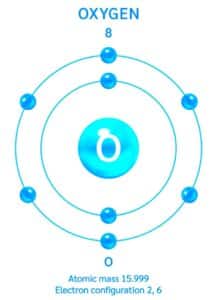 Oxygen gas (O₂) is a colourless, odourless, highly reactive gas, making up nearly 21% of Earth’s atmosphere.
It supports life, through respiration, and combustion.
Symbol is O and atomic number is 8.
Oxygen is fundamental for respiration in living things.
It is essential for industrial processes like welding, metal cutting, chemical manufacturing, and medical life support, acting as a powerful oxidizer that supports combustion.
It’s produced by separating it from liquid air and supplied compressed in cylinders or as liquid oxygen.
Who Discovered Acetylene?
 The following is a brief timeline of the history of acetylene (acetyline [sic]) :
1836 – Acetylene (C2H2) was discovered by English chemist Edmund Davy.
He discovered it accidentally whilst experimenting with potassium.
Davy produced potassium carbide – K2C2 – which reacted with water to release acetylene.
He thought it would be used as an illuminating gas.
1860 – Acetylene was rediscovered by Marcellin Berthelot, French chemist. He named it “acétylène”.
Berthelot also discovered a number of different ways to produce acetylene.
1950s – Acetylene manufactured by the partial combustion of methane (natural gas) or as a by-product in the ethylene stream from hydrocarbon cracking.
What is Acetylene Used For? Acetylene Uses
Here are some of the most notable acetylene uses for oxy acetylene bottles:
- As an industrial gas – oxy acetylene bottles for gas welding and cutting
- Oxy-acetylene is often used for brazing, soldering and heating of copper and its alloys,
- Oxy acetylene bottles used for lighting purposes before safer forms of lighting were available
- As a chemical feedstock for polyethylene plastics and acrylics
How is Acetylene Produced and Stored in Oxy Acetylene Bottles?
- Acetylene (acetyline [sic]) is manufactured by the partial combustion of methane (natural gas) or as a by-product in the ethylene stream from hydrocarbon cracking.
- Pure acetylene can easily explode when in liquid form, solid form or while being pressurized.
- To make it more stable, acetylene is supplied and stored dissolved in acetone or dimethylformamide (DMF) in oxy acetylene bottles.
- This acetylene mixture is placed into oxy acetylene bottles containing a porous filling of agamassan.
- This oxy acetylene bottles makes acetylene safe to transport and use, given proper handling.
How Do You Spell Acetylene?
Acetylene is the correct spelling.
Acetyline is an often used incorrect spelling
What is Acetylene
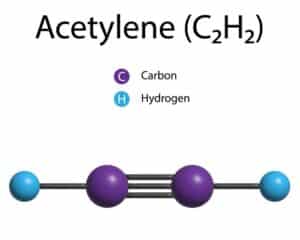 Acetylene is a simple alkyne chemical compound with the formula C2H2.
Acetylene is an extremely flammable and unstable hydrocarbon.
It is typically kept in a solution, due to its instability and volatility.
Most common uses are as oxy acetylene welding gas and as a chemical feedstock for polyethylene plastics and acrylics.
What is the Maximum Working Pressure for Acetylene?
The maximum safe working pressure for acetylene is 15 psig or 103 kPa on gauge pressure.
Acetylene is highly unstable at higher pressures and can decompose explosively.
This decomposition can be triggered by pressure exceeding 15 psi or by a flashback, which is when the flame travels back into the hose or cylinder.
Therefore, it is critical to adhere to the 15 psi limit when working with acetylene to ensure safety and prevent dangerous accidents.
Can You Store Acetylene and Oxygen Together?
No, acetylene and oxygen cylinders must be stored separately, away from each other, ideally in designated areas a minimum of 3m (10ft) apart.
Can Acetylene Bottles be Laid Down?
No, acetylene bottles should never be laid down.
They should always be stored and used in an upright position.
This keeps the acetone (which dissolves the acetylene) and acetylene properly mixed, stable and contained in the porous material inside the cylinder.
Does Acetylene Smell?
Pure acetylene gas is odourless.
Commercial acetylene smells like garlic or ether.
The presence of this odour is considered an important safety feature, allowing for easy leak detection.
How Hot is Acetylene - Oxy Acetylene ?
An oxy acetylene torch temperature is 3,330°C or 6,020°F.
Oxy-Acetylene Cutting
Oxy-acetylene cutting uses a hot flame from burning acetylene and oxygen to preheat metal to its ignition temperature (around 1600°F or 870°C for steel).
Once hot, a separate, focused stream of high-pressure oxygen is released through the torch nozzle to burn and literally blast away the hot metal.
This oxygen jet rapidly oxidizes (burns) the superheated metal, and the force of the jet blows the molten metal oxide (slag) out of the cut, creating the kerf (the gap).
It’s a adaptable process for cutting various metals, requiring specific equipment like cylinders, regulators, hoses, flashback arrestors, and a specialized cutting torch for preheating and oxygen delivery, but requiring strict safety measures for high-pressure gases.
Safety Requirements
Eye protection is required to prevent injury from intense light and sparks.
Risk of flame traveling back into the hoses or cylinders is alleviated by flashback arrestors.
Proper handling and storage of high-pressure gas cylinders is critical.
Welding with acetylene and oxygen - Acetylene gas welding - Gas welding acetylene
Oxy-acetylene welding is a process that uses a high-temperature flame from the combustion of acetylene and oxygen to melt and fuse metal pieces.
This can be done with or without a filler rod.
The equipment required includes gas cylinders, pressure regulators, hoses, and a torch.
Flashback arrestors are essential safety devices that prevent a flame from traveling back into the hoses or cylinders.
It is critical to only use acetylene at a low pressure (under 15 PSI) to prevent flashbacks.
The flame is controlled by adjusting the gas mixture to change the flame’s temperature and chemical action.
Ignite the acetylene gas, then gradually open the valve to achieve a stable, sooty flame.
Once lit, slowly add oxygen to create the desired flame, which has a bright inner cone and a longer outer cone.
Melt the base metal with the flame and add a filler rod if needed.
The ratio of oxygen to acetylene can be adjusted to control the heat and type of flame, such as a neutral or oxidizing flame.
While it’s a versatile tool for heating, cutting, and joining, it is now more often used for thin metal and applications like brazing or patching, as other arc welding techniques offer more penetration and are faster.
Other required tools include a striker for igniting the flame, safety glasses, leather gloves, and pliers for handling hot metal pieces.
To turn off the torch, close the acetylene valve first, then the oxygen valve.