
Global Gas Bottle Statistics (Trends, Forecast & Usage)
Let’s examine gas bottle statistics.
Nearly a third of the worldwide population still cooks their meals over open fires or on basic stoves.
This involves burning coal, firewood, or even animal dung, releasing harmful fumes daily.
Such practices impose grave consequences, mostly for households with no tools or means to cook meals using clean burning fuels reliably.
Even the simplest, widely available cooking devices could improve this situation by using LPG cylinders to fire up stoves and hotplates.
As such, LPG plugs the gap for clean cooking access.
Bringing clean cooking is central for countries transitioning to modern, secure and sustainable energy.
However, this remains an afterthought in many parts of the world.
Let’s glance at gas bottle statistics for the industrial and LPG cylinder market globally:
- Annual Demand: Global LPG demand reached over 330 million tonnes last year, showing a steady annual growth of 2-3% since 2020 [1].
- Reliance on LPG: About 1.3 billion people worldwide rely on LPG cylinders for their everyday household energy, especially in the regions of Asia and sub-Saharan Africa [2].
- Biggest Cylinder Market: India leads the world in the LPG cylinder market size. They currently have around 300 million active domestic lines, driven by government policies [3].
- Australia: Approximately 2 million Australian households and 160,000 Australian businesses rely on LPG gas cylinders for energy. There are also about 9 million leisure cylinders (BBQ and camping) in circulation. Annual LPG consumption is approximately 43 petajoules, of which over 45% is used by industrial and commercial entities.
- Consumption: Both industrial and commercial sectors consume around 40% of the total LPG demand, up by 6% since 2015 [4].
- Emissions: Compared to conventional fuels, LPG emits up to 50% less CO2 and 90% fewer particulate matter, making it a cleaner choice for fuel [5].
- Industrial gas cylinders: There are over 490 million industrial gas cylinders in circulation globally. Globally, more than 8.2 million industrial gas cylinders are manufactured each month. By 2030, the high pressure industrial cylinder market is expected to reach US$3 billion.
- Medical cylinders: The healthcare market for gas cylinders has more than 52 million medical cylinders in circulation, with medial oxygen making up the largest share.
- IoT and RFID cylinders: IoT technology is making inroads into gas cylinders and vessels with sensors for remote monitoring of pressure and gas levels being adopted. RFID chips are also being used for cylinder tracking and transmitting of filling information at refill stations.
- Cylinder market valuation: The global cylinder market is growing at a CAGR of 3.4% with US$3,5 billion market valuation expected by 2033.
- Materials Used: approximately 62% of gas cylinders were made from steel in the most recent year. Aluminium and lightweight composites make up the rest.
- Hydrogen: Hydrogen cylinders and vessels are an emerging cylinder market for fuel cells and hydrogen vehicles. More than 4.2 million hydrogen cylinders entered circulation in 2023.
Gas Bottle Statistics: Where the World Uses Gas Bottles
LPG is typically sold in gas bottles or gas cylinders, with its portability and diverse applications reaching around 1.3 billion people worldwide.
From urban homes in Asia to outdoor heating in Europe, LPG cylinders provide efficient energy access in many parts of the globe where electrification is not yet fully possible.
Asia-Pacific: The Undisputed Giant
The Asia-Pacific region accounts for 55% of total LPG demand, consuming over 180 million tonnes each year [2].
Across this region, India is a frontrunner with over 300 million domestic LPG connections.
Its government-led energy inclusion policies encouraged rural households to switch from biomass to LPG use, a strategic move to cut residential emissions and enhance ambient air quality [6].
China, on the other hand, is the juggernaut in LPG consumption, taking up 20% of global LPG demand, mostly for commercial use and petrochemical feedstock.
Southeast Asian countries like Indonesia, Vietnam, and the Philippines are trailing behind when it comes to LPG usage.
For example, Indonesia’s cylinder conversion program has switched out over 50 million kerosene stoves since its implementation [7].
In Australia and New Zealand, LPG cylinders are a reliable, portable off-grid energy option for daily home and agricultural operations [8].
Typical Gas Bottle Sizes and Dimensions for Australia and NZ
| LPG Gas Bottle Sizes | Gas Bottle Width (mm) | Gas Bottle Height (mm) | Gas in Bottle Volume (L) |
| 4kg Gas Bottle | 340 | 265 | 7 |
| 9kg Gas Bottle | 460 | 310 | 17 |
| 15kg Gas Bottle | 305 | 705 | 29 |
| 18kg Gas Bottle | 310 | 830 | 35 |
| 45 kg Gas Bottle | 375 | 1250 | 88 |
| 90 kg Gas Bottle | 508 | 1340 | 176 |
| 190kg Gas Bottle | 760 | 1350 | 372 |
| 210kg Gas Bottle | 760 | 1350 | 411 |
The volume of LPG gas cylinder gas (LPG gas bottles gas) and LPG gas bottle dimensions in Australia shown are approximate.
Actual gas cylinder sizes (LPG gas bottle sizes) may be different. Gas cylinder sizes (LPG bottle sizes) vary by manufacturer.
Europe: A Mature Market (Leisure, Heating, Commercial)
Europe’s LPG market is mature, as evidenced by its 50 million tonnes of annual consumption [9].
Though many homes are connected to mains gas, LPG cylinders are important in niche applications, specifically:
- Heating and cooking in rural and alpine regions mostly unreachable by natural gas lines.
- Leisure sectors that require a portable, reliable energy supply, such as caravans, holiday homes, and outdoor dining.
- Commercial and industrial sectors that require consistent, high combustion and energy density to speed up processing.
Other countries within the region, like France and Italy, have strong cylinder distribution networks.
In the United Kingdom, the leisure and hospitality sectors rely heavily on gas bottles.
Europe’s eastern portion’s cylinder demand is growing, as LPG’s price points are below the electricity floor price.
Latin America: Strong Domestic and Autogas Usage
Latin America is another prime consumer of LPG cylinders, with 90% of households using them for cooking and heating [10].
In Brazil alone, household LPG penetration is nearly universal, with 8 million tonnes consumed every year by its 200 million citizens.
Countries with strong Autogas sectors, like Mexico, Argentina, and Chile, highly rely on LPG to power up taxis and fleet vehicles, since it’s 40-50% cheaper than conventional petrol [11].
Africa: A Critical Growth Market Switching to LPG
Africa exhibits an upward trend in LPG cylinder adoption, with most countries in the region phasing out harmful traditional biomass for a cleaner, sustainable energy solution.
Of the region’s total population, only 20-30% of the households use clean fuels for cooking, with the remaining still reliant on traditional biomass.
The great news is that Nigeria and Kenya are scaling LPG adoption quickly, persuading their neighbouring countries [12].
Due to restrained adoption, governments and NGOs in the region prioritise LPG access as part of public health and environmental strategy.
Its core goal is to dispatch 100 million LPG connections by 2030.
North America & Oceania: Stable Markets with High Leisure & Industrial Use
North America and Oceania’s LPG market remains steady, with 20 million tonnes of LPG uptake each year.
Though electrification is wider in scope, LPG gas bottles in the United States are mostly for heating, barbecuing, and powering off-grid homes in remote communities.
On the other hand, Canada is reliant on LPG cylinders for both residential and industrial heating in rural areas.
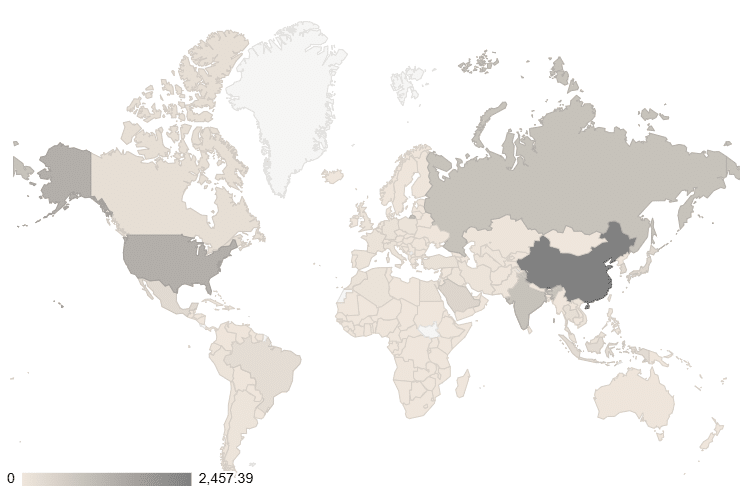
The graph above shows the global map of LPG consumption in 2022, with darker shades corresponding to higher consumption.
For instance, the darker grey area in the Asian continent is China, consuming over 2,457.39 barrels per day, nearly twice the US consumption (less dark).
How Different Sectors Rely on LPG Cylinders – Gas Bottle Statistics
LPG cylinders’ standout feature is portability.
Though it requires logistics, it reaches sectors and reliably supplies energy when electricity lines and gas pipes are unavailable.
This inadequacy is common in remote or rural areas, making LPG in its cylinder form a lifeline to power kitchens, businesses, and even the automotive sector.
The Domestic Sector: LPG for Home
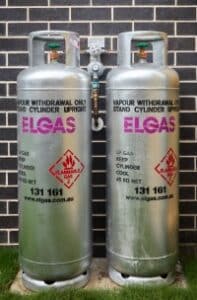 LPG for home is a strong contender, in conjunction with electricity, for clean cooking, heating, and household energy security.
Yet, about 3 billion people globally still lack access to this, mostly resorting to traditional fuels such as biomass, charcoal, or kerosene.
Several countries are taking action to fill the gaps for clean energy access.
For instance, India’s government policies are set to distribute more than 90 million LPG connections since 2016.
This helps reduce indoor air pollution and improve women’s well-being, since they are mostly exposed to harmful fumes when cooking [6].
In the African continent, most countries are pushing for LPG adoption as part of their 2030 Clean Cooking Goals.
This regional pursuit is for 4.5 million households to adopt LPG by 2030 [14].
In Australia and New Zealand, given its abundant gas supplies, gas bottles fulfil the energy shortfall for homes outside mains gas or electricity grids [15].
For most homes with the typical 45kg LPG cylinder, it offers weeks of independence, often useful during blackouts or seasonal supply disruptions.
The Industrial & Commercial Sector: The Engine of Commerce
LPG cylinders have diverse applications in the commercial and industrial sectors.
It powers the productive kitchens and farms to processing operations that need dispatchable and reliable high temperatures.
Given its operational efficiency and cost reduction, gas bottles fuel certain sectors, including logistics, hospitality, manufacturing, and retail.
With its clean combustion and portability features, LPG also powers forklifts.
In Australia, over 60% of forklifts used for logistics and warehousing are powered by LPG cylinders [16].
On a global scale, LPG-powered forklifts maintain around 40% market share, owing to its impact in trimming hazardous emissions that improve indoor environments.
This preference for LPG-powered forklifts over their electric counterparts is attributable to faster refueling speed, reliability, and cleaner operations.
In an operational case-use, LPG-powered forklifts can be refueled in under 60 seconds, compared to the long charging of electrical models.
This sidesteps unwanted downtime, plus consistent better performance over time.
As for emissions, LPG-powered forklifts produce 95% less NOx and little to no particulate matter [17].
Besides forklift use, LPG cylinders support critical commercial and manufacturing operations.
It fires up furnaces, ovens, and dryers that need precise temperature control.
Hospitality and events sectors also rely on gas bottles for cooking and heating in restaurants, consistent flame control in food trucks, and a temporary fuel source for large events, festivals, or catering services.
The Agricultural Sector: Fueling Farms and Harvests
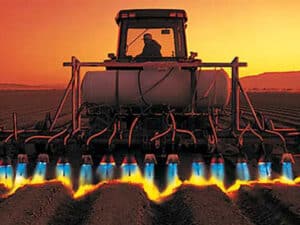
LPG cylinders propel many farms to remain productive, efficient, and sustainable.
Since this sector is operation-heavy, it consumes over 10 million tonnes of global LPG per year for crop drying, heating, and equipment power [18].
LPG-powered dryers reduce the moisture content of grains, pulses and seeds at great speed and scale, without contamination risks.
This equipment provides 80-90% energy efficiency, even ensuring product quality and less waste.
In colder regions, gas bottles are a cheaper means to heat greenhouse and livestock areas, while ensuring animal welfare and year-round productivity.
LPG heaters are a much better choice than electric ones in these use cases, consistently maintaining stable temperatures and even operating during grid power fluctuations.
Many agricultural operations use LPG cylinders for pumps, generators and irrigation systems, particularly in farmlands with unreliable grid or gas mains access.
A Practical Path to a Cleaner Planet: Global Ascent of BioLPG
While LPG reduces greenhouse gas and pollutant emissions, these benefits can be nudged further with BioLPG, its renewable form with better performance that aligns with net-zero targets.
BioLPG is a renewable propane produced from waste oils, biomass, and advanced biofuel processes.
This was once a niche pilot project that is now close to commercial distribution.
As of today, Europe leads the BioLPG production, particularly with Neste’s Rotterdam facility [19].
Since it is chemically identical to conventional LPG, there is no need for any new configuration, parts, or modifications to existing LPG-powered equipment, machinery, or vehicles to switch to BioLPG [20].
Though current volumes remain small when compared to the total LPG market, its growth is expected to be quick and measurable.
If planned projects pan out, the market could exceed 625,000 tonnes per year by 2025, propelled by its drop-in feature, enabling it to blend into existing LPG streams [21].
Why does it matter now?
With a much cleaner production route, BioLPG reduces greenhouse gas by 60-90%, though this will depend on the feedstock choice and allocation rules implemented [20].
BioLPG ensures that the cylinder economy is part of the future by turning existing LPG infrastructure into an immediate route to deep carbon cuts.
This way, it allows homes, businesses, and vehicle fleets to reduce carbon emissions without spending or investing in hefty price tags.
Projecting the Next Chapter for Bottled Gas
The global gas bottles market is entering a period of steady, regionally differentiated growth to 2030.
This is spurred by population and income growth in emerging markets, targeted clean-cooking program, and rapid commercialisation of BioLPG.
Both the BioLPG and renewable-LPG segments are expected to grow rapidly in the upcoming years.
On one end, conventional LPG demand continues to expand in regions such as Asia and Africa, while stabilising in other mature economies.
This projected market growth by 2030 reaches US$4.4 billion, double its current market price of US$2.1 billion [22].
Across Asia, India, China, and Southeast Asia will remain the principal drivers of global cylinder volumes through 2030.
As India continues to pursue its household program and urbanisation, bulk supplies are needed to sustain the high demand for cylinders.
Africa’s LPG adoption also continues to rise.
With its growing policy initiatives and donor-backed clean-cooking targets, the region positions itself as the single largest source of cylinder demand growth [23].
As Europe leads BioLPG production, its commercial rollouts are expected to bring massive volumes of hundreds of kilotonnes per year, if projects materialise and are successful [20].
The full scale up of the gas bottle sector is one step to decarbonisation, enabling clean cooking for all.
Cylinder volumes grow fastest in Asia and Africa, with its renewable types ramping up in Europe and progressive markets.
As global production hits a record pace, lower-carbon fuel adoption is within reach at the end of this decade.
Methodology & Sources for Gas Bottle Statistics
[1] IEA – Oil Market Report – July 2024
[2] WLPGA – LPG and the Global Energy Transition
[3] IEW – PPAC Tracker
[4] Research Gate – LPG Market Growth: Set to Reach USD 244.11 Billion by 2030 with a 6.5% CAGR
[5] Science Direct – In-use emissions from biomass and LPG stoves measured during a large, multi-year cookstove intervention study in rural India
[6] Ministry of Petroleum & Natural Gas – Adoption of Clean Fuel for Cooking in Rural Areas
[7] IEA – Southeast Asia Energy Outlook 2024
[8] Genesis – What is LPG bottled gas?
[9] IndexBox – Europe – Liquefied Petroleum Gas (LPG) – Market Analysis, Forecast, Size, Trends, And Insights
[10] Science Direct – LPG fuel subsidies in Latin America and the use of solid fuels to cook
[11] WLGA – Autogas Incentive Policies 2023
[12] Clean Cooking Alliance – SCALING LPG FOR COOKING IN DEVELOPING MARKETS
[13] The Global Economy – LPG consumption: world map
[14] IEA – Universal Access to Clean Cooking in Africa
[15] DCCEEW – Australia’s fuel security
[16] WLPGA – LPG for Heavy Duty Engines
[17] Research Gate – Environmental life cycle assessment of forklifts’ operation – a well-to-wheel analysis
[18] LPGas – The global LPG industry in 2023
[19] Neste – Neste delivers first batch of 100% renewable propane to the European market
[20] Frontier Economics – Pathway to zero emissions for LPG
[21] Argus – BioLPG: Supply boost
[22] Research and Markets – Bio LPG Market – Forecasts from 2025 to 2030
[23] WLPGA – Statistical Review of Global LPG